Published: 07/31/2026
By Jamie Hansen, Global Health Communications Manager
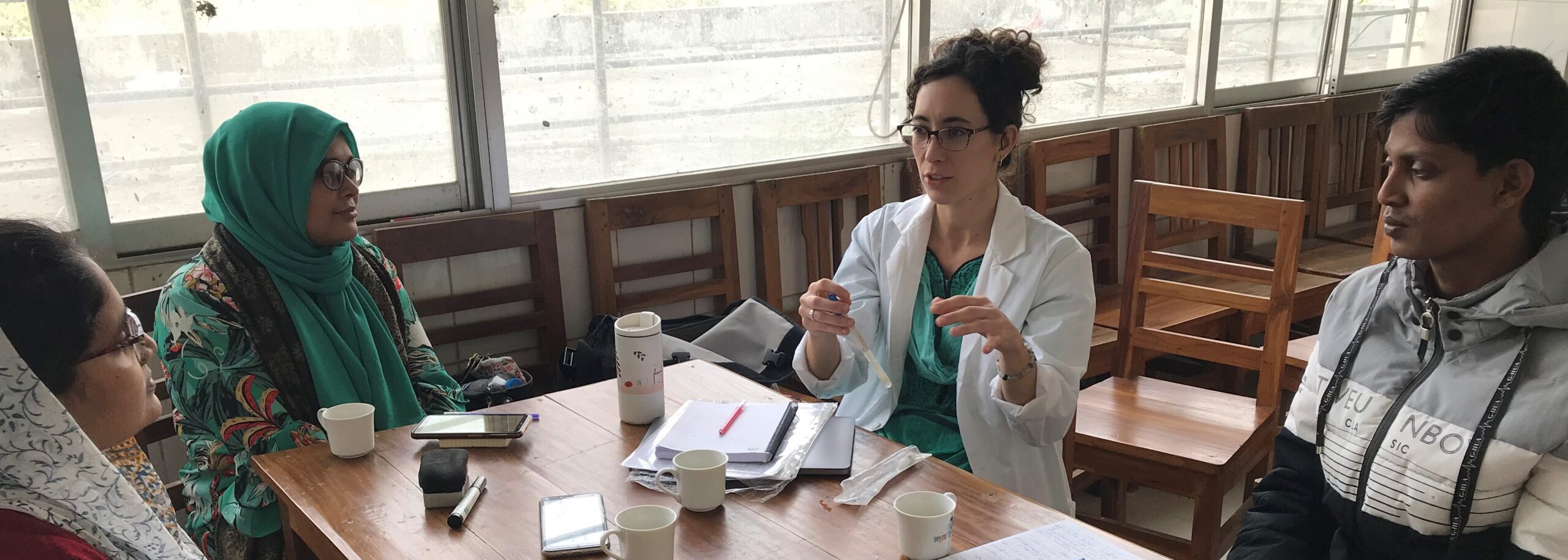
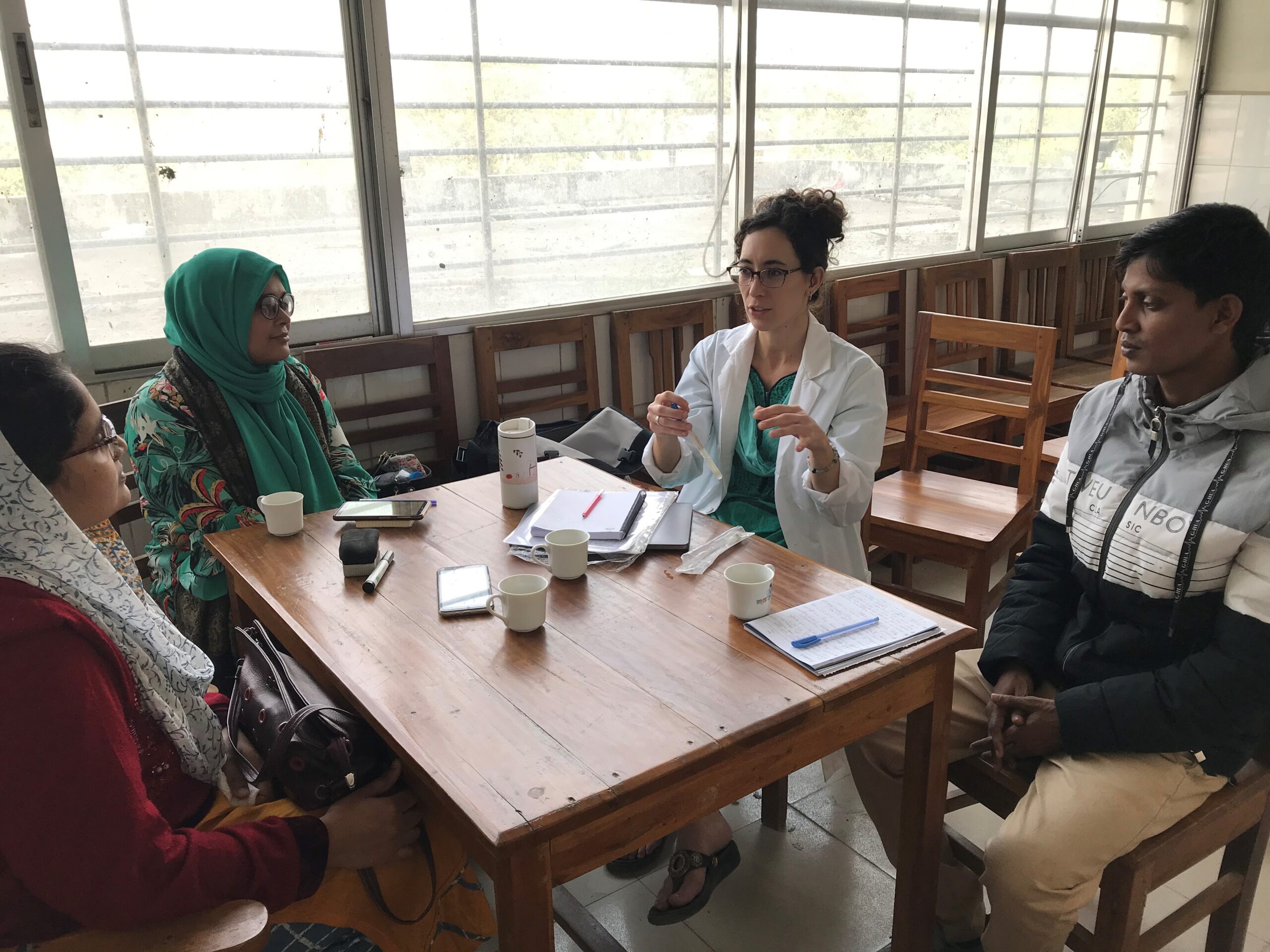
Image: Ashley Styczynski, MD, demonstrates sampling techniques to a study team in Bangladesh during her fellowship year investigating antimicrobial resistance.
Ashley Styczynski is on the front lines against drug-resistant bacteria — a growing global threat to our ability to treat even basic infections. Shuchi Anand is investigating a mysterious kidney disease striking farmworkers from India to California’s Central Valley. Cherinet Osebo is building digital tools to improve trauma care in Rwanda, Ethiopia, and the United States. Joelle Rosser is deploying AI and drones to track mosquito-borne diseases from Indonesia to Costa Rica.
Despite their distinct focus areas, these researchers share a similar approach. They are addressing global health threats at the source, grounded in deep local knowledge and trusted relationships with regional partners. And each credits their impactful work to a year-long research fellowship funded by the Fogarty International Center at the National Institutes of Health (NIH) and administered by the Stanford Center for Innovation in Global Health.
Since 2012, the Stanford Center for Innovation in Global Health (CIGH) has cultivated emerging health leaders through the Global Health Emerging Scholars (GHES) fellowship. This program provides a full year of funded, mentored research training, placing early-career researchers at partner institutions across Africa, Latin America, the Caribbean, South and Southeast Asia, Eastern Europe, and Oceania.
CIGH administers the program alongside Yale University, the University of California, Berkeley, and the University of Arizona. GHES is one of seven consortia that make up the Global Health Program for Fellows and Scholars /Launching Future Leaders in Global Health Research Training Program (LAUNCH).
Michele Barry, MD, director of the Stanford Center for Innovation in Global Health was the first principal investigator of the grant, a position which has now transitioned to Jason Andrews, Stanford professor of infectious diseases and geographic medicine. Barry, also Stanford’s senior associate dean of global health, points to its bidirectional approach as the program’s defining asset. Under this approach, top-tier faculty and internationally recognized global health leaders from both U.S. and low-and-middle-income institutions mentor pre-and post-doctoral fellows from both settings, supporting their career development as they contribute to ongoing research programs.
“GHES has really been a paradigm and fabulous example of bilateral exchange and equity,” she said.
Andrews agreed. “The most effective global health solutions are rooted in deep, local collaboration,” he said. “By providing immersive research training, GHES empowers fellows to bridge the gap between cutting-edge science and real-world implementation.”
Fellows leave with expertise, relationships, and leadership skills that shape their careers — and their fields — for years to come. Their contributions include, to name just a few: technology-based approaches to vector-borne disease, advancing breakthroughs in research on the African microbiome, innovative trauma care platforms in resource-limited settings, and community-based mental health models that have expanded access from Zimbabwe to the United States.
Explore these stories and more in the links below.
- Ashley Styczynski: Leveraging local knowledge to combat antimicrobial resistance
- Cherinet Osebo: Turning frontline experience into digital solutions for trauma medicine
- Dylan Maghini and Ovokeraye Oduaran: Advancing Breakthroughs in Research on the African Microbiome Through Community-Engaged Research
- Joelle Rosser: Harnessing AI and drones to combat mosquito-borne disease in a changing climate
- Shuchi Anand: Building bridges to combat kidney disease across continents
Applications are open for the 2027-28 fellowship year through October 1, 2026. Learn more and apply.