Published: 07/17/2026
By Jamie Hansen, Global Health Communications Manager
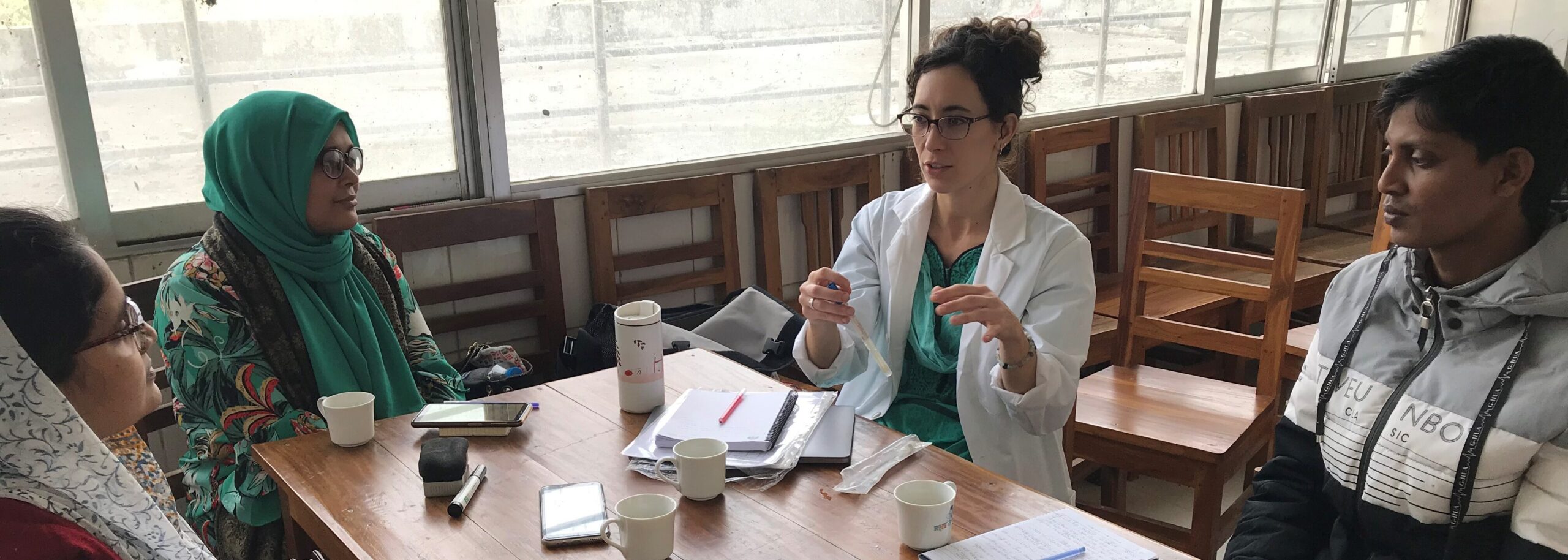
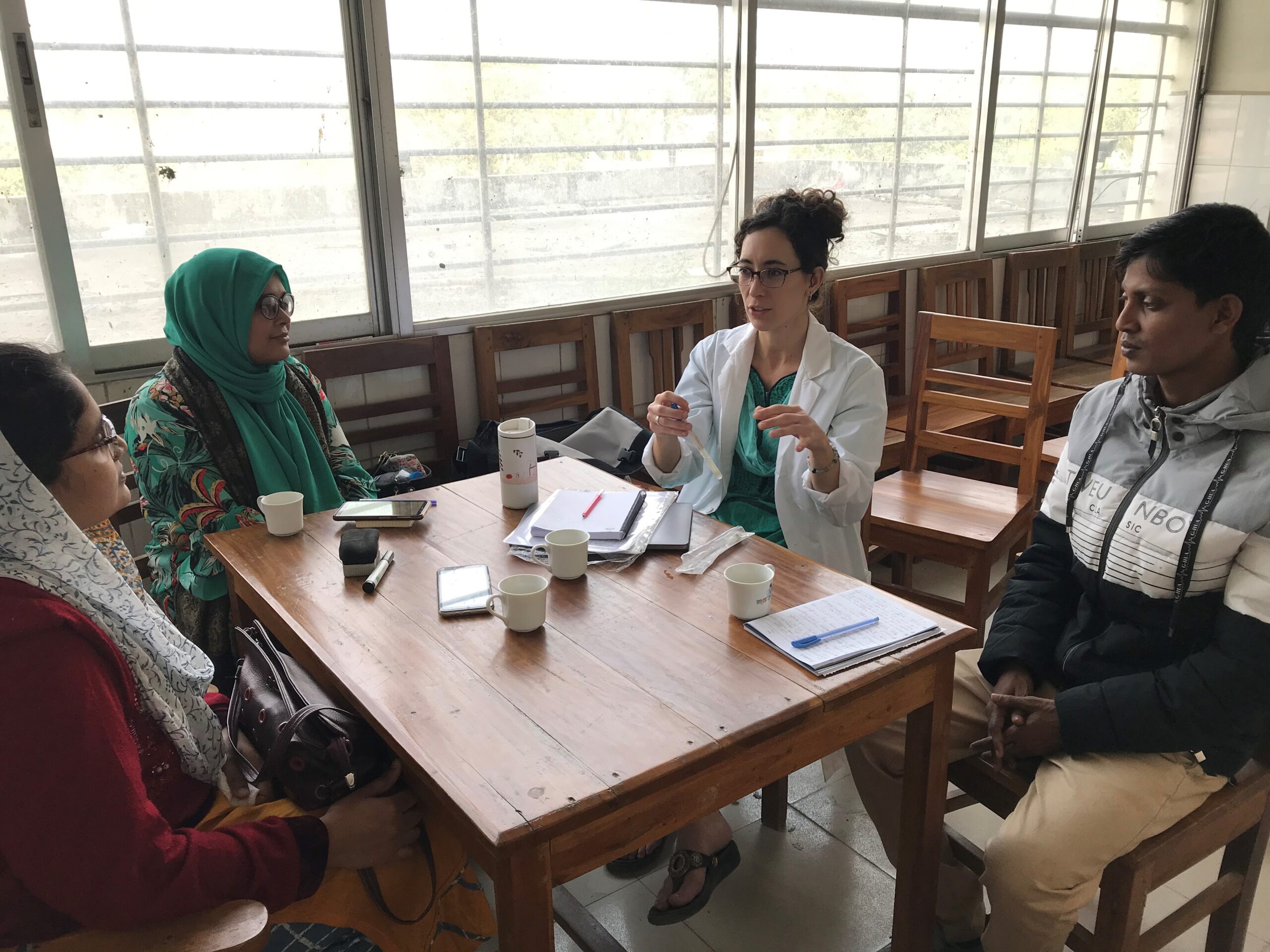
Photo caption: Styczynski demonstrates sampling techniques to the study team in Bangladesh. (L to R): Akhi Akhter, Fahmida Sarker, Ashley Styczynski, Md. Julfikker Ali Khan. Courtesy of Ashley Styczynski.
If antimicrobial drugs lose their power to fight infection, diseases like pneumonia or injuries like a simple flesh wound can become deadly again. One of today’s most pressing global health challenges, antimicrobial resistance (AMR) results in one million deaths annually and is projected to cost the global healthcare system over $1 trillion by 2050.
Dr. Ashley Styczynski, MD, MPH, is at the forefront of combating this threat as a medical officer in the International Infection Control Branch at the CDC. She credits much of her expertise in this critical field to her 2019-2020 fellowship with the Global Health Emerging Scholars (GHES) program supported by the Stanford Center for Innovation in Global Health and funded by the National Institutes of Health. She says the fellowship provided her with an unparalleled opportunity to develop deep-rooted local knowledge and relationships necessary for meaningful impact through a year of immersion in Bangladesh, where she continues research collaborations today.
Styczynski pursued the fellowship after learning about alarming rates of infection with drug-resistant bacteria among newborns in Bangladesh from her mentor Steve Luby, MD. She was working with Luby as a Stanford infectious disease fellow at the time.
“I realized that, to have an impact, I needed to spend time on the ground in Bangladesh understanding the local context and being more directly connected to the people affected by the problem,” she recalled. “It’s very important to have dedicated time and space to build relationships and become attuned to asking the right questions.”
Building relationships to understand the problem
She applied for the GHES fellowship because it uniquely offered a full year of funded, in-country research and mentorship by Stanford and Bangladeshi experts. During her fellowship, Styczynski established critical relationships with researchers at the International Centre for Diarrhoeal Disease Research, Bangladesh (icddr,b) that shaped her understanding of local priorities and realities. Styczynski’s research took place at Faridpur Medical College Hospital, which, through extended Gates Foundation-funded efforts to understand causes of childhood mortality, had identified a very high burden of antibiotic resistance among hospital newborns.
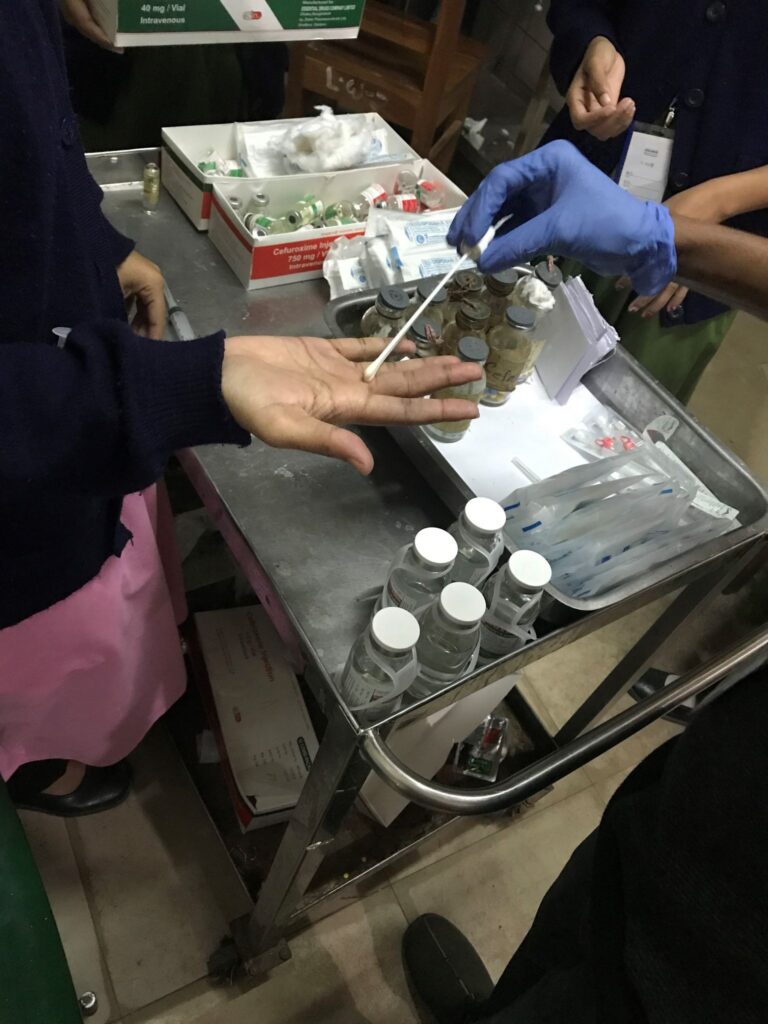
“I wanted to leverage their ongoing research and then go deeper to understand the reservoirs and transmission sources of antibiotic-resistant bacteria,” she said. During her time there, she gained empathy for the day-to-day challenges physicians faced. She witnessed their constraints and dilemmas and saw how a lack of access to diagnostics and inadequate infection prevention and control led clinicians to resort to overprescribing antibiotics.
“People talk about ‘irrational antibiotic use,’ but I saw that it can absolutely be rational on the part of a healthcare professional who can’t bear to see another child die,” she said. “This understanding has helped me in having conversations with other stakeholders who work in global AMR to say, ‘there’s nothing irrational about it.’ It’s that other tools and solutions aren’t available, and this needs to be fixed from a larger system level.”
While antibiotic resistance is traditionally thought to originate in hospital settings, Styczynski and her collaborators also found a significant burden among mothers and infants born at home, highlighting that antibiotic-resistant bacteria abounded in local communities as well as in hospitals.
“That was really surprising and continues to inform how I think about antibiotic resistance and what strategies are needed to control it,” she said.
When crisis struck, relationships mattered
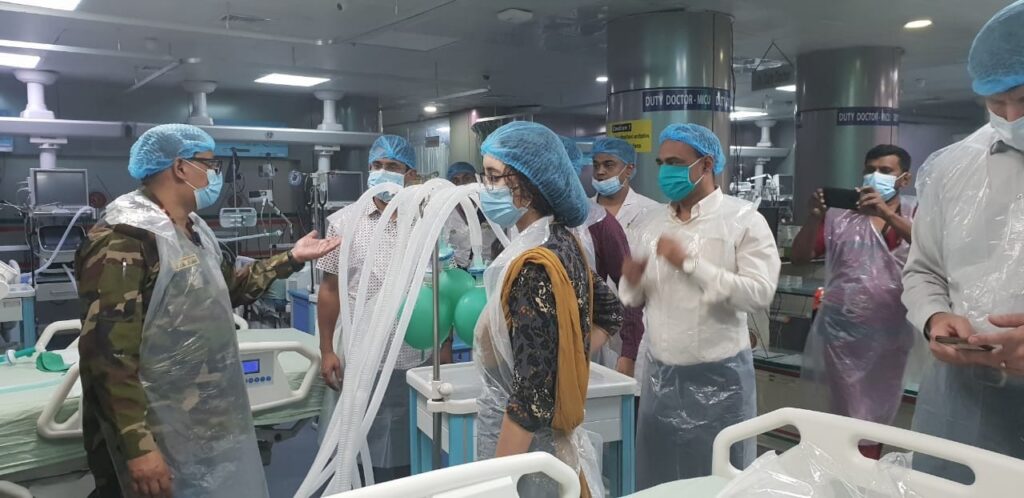
Styczynski’s deepening relationships in Bangladesh also enabled her to contribute in ways she never expected. As COVID-19 began its rapid spread across the globe in early 2020, Stanford required international travelers to return to the U.S. Styczynski, however, had witnessed the scarcity of infectious disease specialists in Bangladesh and realized that her prior experience in infectious disease, including as an Epidemic Intelligence Service officer for the CDC, could be of great help. She petitioned for and received special permission to stay in Bangladesh, partnering with icddr,b to develop infection control trainings for frontline healthcare providers and protocols for the proper use of personal protective equipment (PPE). The experience further deepened her relationships with local researchers and health leaders and led to ongoing research exploring the efficacy of community masking and ventilation in healthcare settings to prevent COVID-19.
The fellowship also inspired a research proposal to understand the causes of high stillbirth rates in Bangladesh, a problem that her icddr,b collaborators shared with her. Styczynski recognized an opportunity to apply for funding to help address the problem. She received Stanford Health Policy’s prestigious Rosenkranz Prize to pursue this research with local collaborators.
“This work was really born out of having those kinds of relationships and connections with people who knew the context and could say, ‘this is a problem that has been going on here, and nobody’s looking at it,’” she said.
Applying insights to global impact
Now based at the CDC, Styczynski retains her Stanford affiliation as an adjunct clinical assistant professor of medicine, which enables her to continue many research projects launched with support from GHES. Additionally, she’s continuing her Rosenkranz-funded investigation into the causes of stillbirths, for which she suspects that water quality and contamination as well as pesticide exposures are significant factors, with additional support from the Stanford Woods Institute for the Environment.
At the CDC, Styczynski investigates the burden of drug-resistant microbes across six countries, including Bangladesh. She says the relationships she cultivated and the knowledge she gained during her fellowship remain invaluable assets in her ongoing work.
“I feel so much more qualified for this role because of the extended, immersive time I spent in-country, which is a rare opportunity,” she explained. “I have a much deeper understanding of the realities people face in Bangladesh, which is so important when thinking about making recommendations. Seeing the challenges first-hand has provided a complete shift in my perspective.”
Learn more
Explore the publications related to Styczynski’s work in Bangladesh.
- Perinatal colonization with extended-spectrum beta-lactamase-producing and carbapenem-resistant Gram-negative bacteria: a hospital-based cohort study
- Perinatal colonization with extended-spectrum beta-lactamase-producing and carbapenem-resistant gram-negative bacteria among home births in Bangladesh
- Impact of community masking on COVID-19: A cluster-randomized trial in Bangladesh
- Assessing impact of ventilation on airborne transmission of SARS-CoV-2: a cross-sectional analysis of naturally ventilated healthcare settings in Bangladesh