Published: 05/13/2026
An interview with Planetary Health Postdoctoral Fellow Nathalie Lambrecht
By Jamie Hansen, Communications Manager
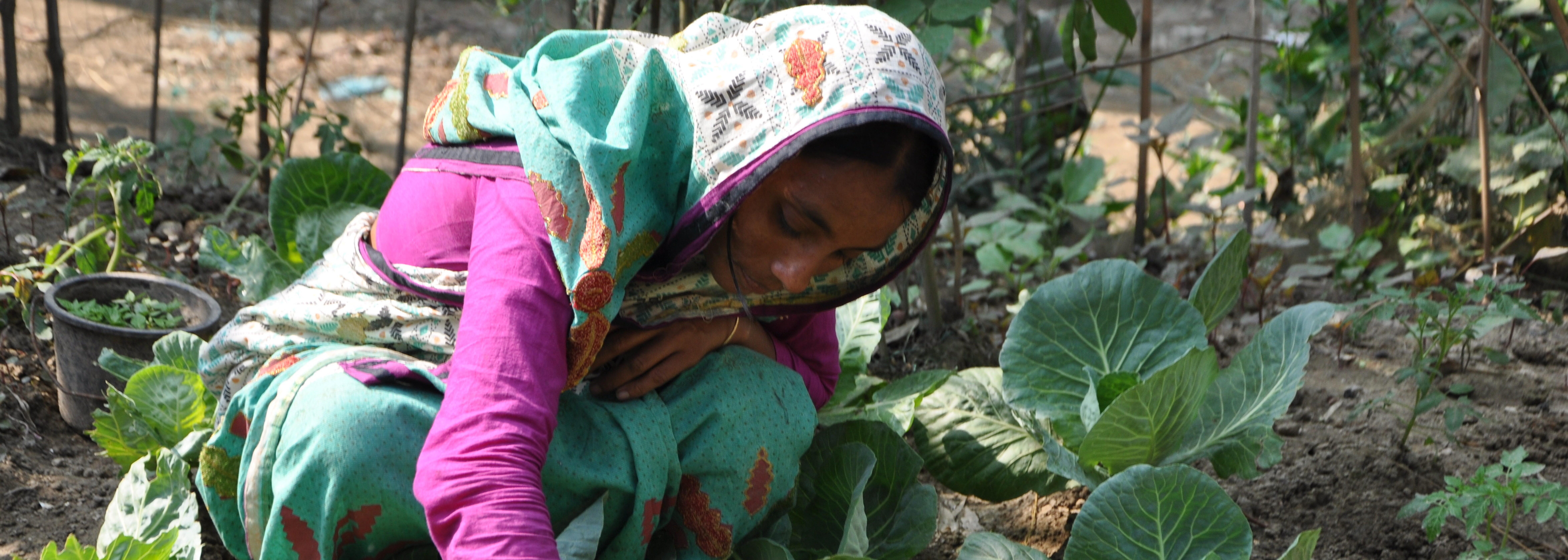
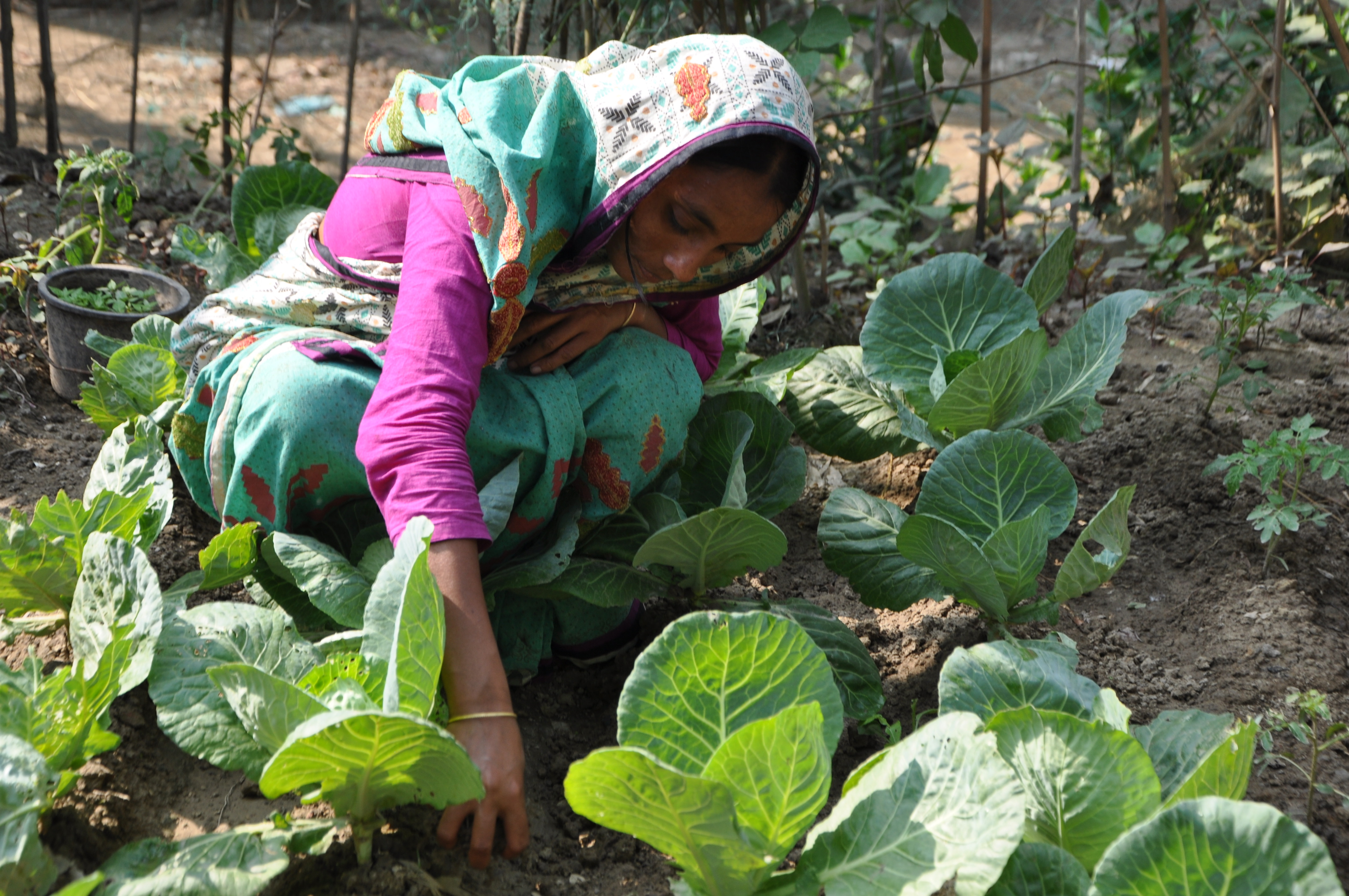
Cover image of a woman working in a home garden as part of the FAARM Trial in Bangladesh, by Thalia Sparling
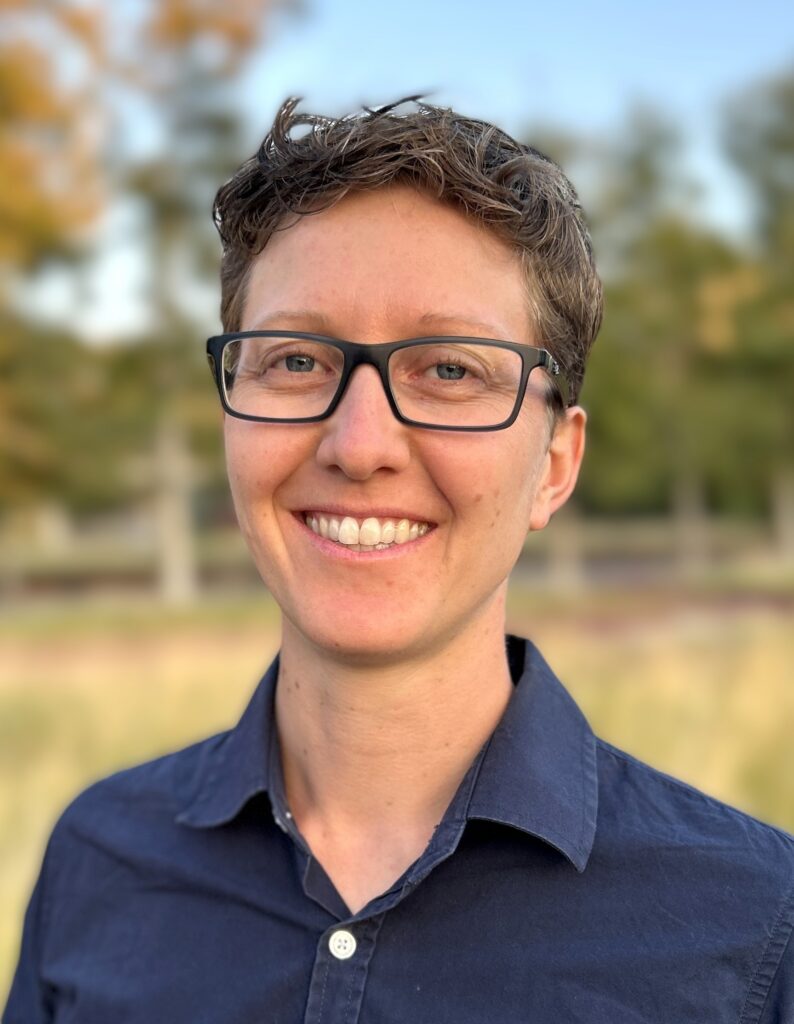
The food we eat profoundly impacts our health, as well as the health of the planet. Stanford-LSHTM Planetary Health Postdoctoral Fellow Nathalie Lambrecht, PhD investigates these connections as a nutritional epidemiologist and interdisciplinary food systems scholar.
As a fellow based at the Stanford Center for Innovation in Global Health and Stanford Center for Human and Planetary Health, she’s studying the benefits of diversifying crops and livestock to protect children from the negative effects of drought in Eastern Africa. Stanford mentors Michele Barry, MD, and Steve Luby, MD, are supporting this work, along with London School of Hygiene & Tropical Medicine (LSHTM) mentor Peninah Murage, PhD.
She’s also working alongside Stanford professors Christopher Gardner, PhD, Jen Burney, PhD, and Roz Naylor, PhD to evaluate initiatives to improve childhood nutrition, reduce greenhouse gas emissions, and promote sustainable agriculture through healthy and sustainable menus in K-12 schools in the US and globally.
Lambrecht is the lead author on a new publication in Nature Food that investigates the dietary benefits of a homestead food production program for women in Bangladesh.
We spoke with Lambrecht about the motivations for her research and what she’s learning about sustainable ways to protect nutrition and health on a changing planet.
Do you have a personal connection to food or gardening that drives your passion for this research?
My passion for food systems research is integrated into my everyday life. We all eat every day, and the choices we make matter for our health, for other people, and for our environment. Personally, I love cooking, baking, growing vegetables, raising chickens, and connecting with local farmers and producers. It’s especially important to me now, having young kids, to raise the next generation to understand where food comes from and make the connections between our bodies, our planet, and enjoying nutritious, wholesome food.
Can you say more about what sparked your interest in nutrition’s relationship with climate and health?
My interest in nutrition started as a college athlete experimenting with diets to fuel peak performance. But once I started learning about the impacts of food on the environment, I wanted to understand the benefits and trade-offs of our diets, especially meat consumption, across multiple dimensions like health, sustainability, and equity. That led me to my research on smallholder livestock ownership in Africa, examining the potential benefits for maternal and child nutrition and risks from exposure to zoonotic diseases. With this planetary health fellowship, I’ve had the opportunity to deep dive into the climate change aspects of this research.
Much of your current research focuses on diversifying crops and food sources. Why is this important, and how can it help buffer the effects of drought on child and adolescent undernutrition?
Agricultural diversification incorporates growing a diversity of crops, livestock, or other species through methods like intercropping (growing multiple crops together), agroforestry (integrating trees), or mixed crop-livestock systems. These farming methods can diversify diets and livelihoods while supporting healthier agricultural ecosystems that are more resilient to climate shocks.
My fellowship research on smallholder farming in East Africa shows that children and adolescents exposed to moderate droughts have reduced growth, but households with greater food-group diversity—especially those producing milk—show resilience to these negative effects. These early findings highlight that farm-level crop and livestock diversification can be a strategy for protecting children during periods of climate stress.
Many of your efforts focus on improving nutrition in institutions such as schools, universities and hospitals. What are the benefits of an institutional focus to sustainable nutrition?
Institutions serve millions of meals daily, making them powerful levers for large-scale change for improving the health of people and our planet.
Schools are particularly important settings because early experiences with food can shape lifelong habits and health. For many children globally, school meal programs are also an essential safety net. Integrating nutritious, sustainable, and regional foods into school meals can support children’s development while supporting local farmers and reducing greenhouse gas emissions.
These same principles apply to food served in hospitals and nursing homes, where my research has shown that menus often lack adequate nutrition and fall short of planetary health diet recommendations.
Building on the importance of crop diversification, another important intervention you study is homestead food production — essentially, home gardening. Can you tell us what you learned about the benefits of home gardening for women’s nutrition based on your new study in Bangladesh?
The Bangladesh study analyzes the impact pathways of the FAARM trial, a large five-year randomized controlled trial of a combined home gardening, poultry production, and nutrition education intervention. This study is a collaboration with researchers at Charité – Universitätsmedizin Berlin, the Potsdam Institute for Climate Impact Research, LSHTM, and Bielefeld University.
Our team previously found that the intervention improved women’s dietary diversity, as well as the diversity of crops they were growing in their gardens. In the new Nature Food study, we used causal mediation analysis to parse out how the different components of this complex intervention achieved impacts on diets. The most striking result is that garden production accounted for the majority of the improvement in women’s dietary diversity—about 78% of the effect—while nutrition knowledge contributed about 18% and poultry only about 4%. This underscores how beneficial home garden diversification can be for women’s nutrition, especially in rural settings where women have limited empowerment.
Our findings are also important from a programmatic perspective. For instance, the poultry production component required large upfront investments but had limited dietary benefits. Understanding which intervention components drove the most impact can help us optimize nutrition programs for greater impact, which is particularly timely given rising concerns about dietary quality, gendered nutrition outcomes, and the climate vulnerabilities affecting smallholder households.
Lambrecht will be joining the University of Minnesota Institute on the Environment as an Assistant Research Professor in the Fall of 2026.
Learn more about the Stanford-LSHTM Planetary Health Postdoctoral Fellowship here.