Programs in Building Community
Stanford African Scholars in Global Health Program (SASH)
An initiative to promote health equity, capacity-strengthening, and unique focused learning between African medical institutions and Stanford.
Photo: SASH Scholar Dr. Miriam Mutebi presents about her work at Stanford. Courtesy of Stanford DoM.
About the Program
The Stanford African Scholars in Global Health (SASH) program strengthens physician training by equipping African physicians with targeted, advanced clinical skills through 6-weeks of immersive training at Stanford, followed by 12-months of sustained Stanford faculty mentorship and grant funding to apply those skills at home. SASH physicians lead year-long quality improvement projects informed by national health priorities and local needs — expanding medical specialty capacity, training health care workers at all levels, and implementing system-level changes that directly improve health outcomes in their local contexts.
This inaugural program is led by the Stanford Center for Innovation in Global Health, in partnership with the Stanford Center for Medical Education, and funded by an independent educational grant from Pfizer.
Meet the 2025 SASH scholars here.Overview
In 2025, the SASH program hosted 24 mid-career African physicians across four cohorts. Each fellowship consisted of two phases: The first at Stanford; the second in the country of their home institution.
Phase 1
Each cohort began their fellowship with six weeks at Stanford, with the program tailored to each scholar’s interest and implementation project topics.
Each scholar was paired with Stanford faculty physicians as mentors who guided their training, which included observing medical practices in clinical settings at Stanford hospitals and clinics, meeting with Stanford experts, trainees and students, and participating in lectures and simulation activities.
To facilitate shared learning, scholars were appointed as Visiting Instructors and earned Continuing Medical Education credit by attending clinical rotations, departmental meetings, and grand rounds and giving guest lectures and presentations. In 2025, scholars collectively spent ~ 3,700 hours learning and gave 37 talks to the Stanford community – sharing their expertise in addressing health challenges in low- and middle-income countries.
Time at Stanford fostered quality improvement and capacity building for each scholar’s home institution, including subspecialty knowledge, treatment and management of complex cases, and exposure to different approaches to care, health systems management, and medical education and innovation – all designed to enhance the identified skillset needed at their home institutions.
By the end of six weeks, scholars built lasting partnerships, leading to long-term collaboration, new career opportunities, and grant submissions to expand their work.
Phase 2
After training at Stanford, scholars returned to their academic institutions with a grant of up to $50,000 from Pfizer to implement their proposed projects over 12 months. As they implement their projects through 2026, they are receiving sustained faculty mentorship, reporting on their progress, and engaging with the SASH team and SASH’s Continuous Improvement Coach, Jake Mickeleson.
In January 2027, CIGH will hold a final convening in Nairobi, Kenya with all 24 scholars, where they will present on the impact of their projects.
Impact
To date, SASH has trained 24 African physicians from 19 medical institutions across 9 countries. Aligned with CIGH’s commitment to advancing gender equity in global health leadership, more than 50% of scholars are women.
SASH scholars’ clinical training and quality improvement projects are addressing critical and timely health challenges:
- Training health care workers at their hospitals, institutions and community health facilities.
- Improving patient outcomes through enhanced service delivery, linkages to care, and health education.
- Strengthening institutional capacity and driving systems-level change through the development of new protocols and programs.
By the end of 2026, scholars’ projects will result in:
- 1,930 healthcare workers trained
- 780 medical students trained
- 1,540 residents trained
- 50,000+ patients reached
- Development of new tools, guidelines, and referral pathways
Eligibility
This program was open to licensed African physicians currently working as faculty at an African academic institution (university or teaching hospital). Eligible applicants are engaged in clinical care, teaching, and scholarly activity that advances clinical medicine. The program was open to physicians from all specialties and primary care who sought a specific skill to improve health outcomes at their institution. However, those from Sub-Saharan Africa interested in the fields of antimicrobial resistance, oncology, vaccine uptake, infectious and inflammatory diseases were prioritized.
Recruitment
Recruitment for all four cohorts was completed in 2024. This program received more than 400 applicants for 24 total spots. Thank you to everyone who applied for the SASH program.
SASH is a grant-funded program, currently funded through 2026. While CIGH is actively pursuing new partnership opportunities to bring additional cohorts to Stanford, we are not currently recruiting for the SASH program. For updates on the program and future recruitment cycles, please join our SASH listserv.
SASH Partnership Opportunitiy
SASH strengthens workforce capacity and improves health outcomes on the African continent, while expanding opportunities for equitable partnership building and bidirectional learning between Stanford University and African medical institutions. This program addresses a critical gap in US-based global health fellowship programs and offers a scalable, locally led model to strengthen health systems by investing in tailored training for physician-leaders at Stanford who return to their respective countries, hospitals and medical institutions to:
- Implement high-impact projects using the new skills and partnerships they developed at Stanford.
- Train others (physicians, community health workers, medical students, residents and trainees), expanding capacity.
Share results with Ministries of Health to inform policy and improve practices, scaling impact regionally and nationally. - As we near the end of this inaugural three-year program, SASH is poised to deepen its impact – reaching more African scholars, institutions and communities.
Leveraging a proven program framework and theory of change, we aim to:
- Bring additional scholars to Stanford to equip them with advanced clinical and leadership expertise that strengthens health systems, institutions, and career trajectories, and improves health outcomes in their respective countries.
- Expand training pipelines and sustainable medical specialty capacity, generating long-term economic value by creating jobs, improving health system productivity, and enabling a more resilient, locally led healthcare workforce.
Please contact us to explore partnership opportunities: We welcome the opportunity to work with visionary donors to advance global health innovation, education, research, and leadership. Learn more and explore specific opportunities for giving here and contact globalhealth@stanford.edu for more information.
SASH Stories: Video Features about SASH
SASH Team


Kelsey Fisher
SASH Program Manager
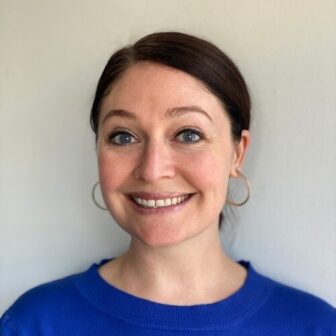
Kelsey Fisher
SASH Program Manager
Kelsey Fisher serves as the Program Manager of the African Scholars in Global Health Program for Stanford’s Center for Innovation in Global Health. Kelsey returned to Stanford in December 2023, after nearly a decade managing programs to improve health equity, livelihoods and education access, with a focus in Sub-Saharan Africa. Most recently, Kelsey managed a portfolio of health systems strengthening programs at GAIA Global Health, where she managed GAIA’s scholarship and fellowship programs for nursing students and new graduates in Malawi. Before getting started in international development, Kelsey worked in Academic Services at the Stanford Graduate School of Education, where she supported faculty and curriculum planning.
Kelsey has a B.A. in Communications from California Polytechnic State University (Cal Poly, San Luis Obispo) and an M.S. in Public Administration from San Jose State. She is passionate about health equity and improving education access in hard-to-reach areas. In her free time, Kelsey loves exploring San Francisco, hiking, running, seeing live music, and spending quality time with family and friends.


News and Highlights from SASH






Contact Us
For questions about this program, please contact the team by emailing ghscholars@stanford.edu.