Please ensure Javascript is enabled for purposes of website accessibility

Sign up to learn more about news, events and opportunities with Stanford Global Health.

Insights from Women Leaders in Global Health

We’re celebrating International Women’s Day by showcasing the voices and insights of women global health leaders at Stanford. Read on to hear from several members of the Stanford Center for Innovation in Global Health’s Core Leadership Team. Learn about their career paths in global health, their thoughts on the power of mentorship, and their advice for aspiring women leaders.

Click on the pictures below to hear these women leaders' insights on global health leadership and mentorship

Michele Barry, MD

Senior Associate Dean and Director of the Center for Innovation in Global Health

Michele Barry, MD

Senior Associate Dean and Director of the Center for Innovation in Global Health

Describe a time when you’ve seen women’s leadership make a difference in global health outcomes.

As I realize climate change is now global health’s largest problem, one woman who is a personal hero and has clearly made a difference in climate discourse is Karen Christiana Figueres, a Costa Rican diplomat who has led national, international and multilateral policy negotiations. She was appointed Executive Secretary of the UN Framework Convention on Climate Change in 2012 and worked tirelessly to rebuild the global climate change negotiating process leading to the 2015 Paris Agreement, widely recognized as a historic achievement leading to the massive growth in solar and wind capacity with many countries adopting net zero targets. My take on women’s leadership is that it helps lead to consensus building.

Describe a story from your own life when a leader provided valuable mentorship, support, or inspired your career path.

I never had a woman mentor, so have dedicated my career to developing pathways for women to be exposed to women leaders and mentors. When it became clear that women were 75 percent of the workforce in global health but only 25 percent of leadership I worked to find financing for a leadership program for women working in global health to advance to CEO positions. Anita Zaidi of the Gates Foundation encouraged me to think big and I eventually was able to found a NGO called WomenLift Health which has touched 4000 women globally.

Share some advice to the younger generation of future women leaders

You are not alone and don’t be hesitant to seek mentorship and sponsorship of another woman or a male ally. Also remember the collective voice of women is powerful. Embrace your superpowers!

Amanda Marr Chung, DrPH

Executive Director, Center for Innovation in Global Health

Amanda Marr Chung, DrPH

Executive Director, Center for Innovation in Global Health

Describe a time when you’ve seen women’s leadership make a difference in global health outcomes.

While Dr. Rudo Chikozore was a Provincial Medical Director (PMD) in Zimbabwe, her initial attempts to address vehicle and fuel shortages went nowhere. However, after she empowered two members of her team to investigate the problem and propose a solution to resolve this, they set up a system to track vehicle and fuel usage. Moving forward, vehicles were available and fueled to transport health teams where they were needed most to provide immunizations to children for vaccine-preventable diseases and spray insecticides against mosquito-borne diseases. This is an example of how local leaders are the ones who are best positioned to resolve the challenges they face and speaks to the effectiveness of a woman leader who trusts her team, delegates responsibilities, and fosters a sense of ownership over their work.

Describe a story from your own life when a leader provided valuable mentorship, support, or inspired your career path.

A male mentor of mine greatly influenced my career trajectory. He encouraged me to pitch our idea to a donor, which led to the funding and development of a multi-country project in Southern Africa. Along with another male mentor, he supported me in writing several manuscripts about our research as first author. Additionally, when we applied the tools we had developed for malaria programs to HIV, they encouraged me to return to school to pursue a doctorate degree while also serving as Principal Investigator.

Share some advice to the younger generation of future women leaders

Working in global health requires humility, curiosity, a growth mindset, and a commitment to sustainability. It’s important to show deep respect for your international partners and to focus on building long-lasting relationships.

Navigating a global health career can be challenging to maintain relationships with partners and family. It’s important to have a shared understanding of travel requirements and flexibility around working hours due to time zone differences. As women tend to bear a disproportionate burden of caring for children and aging parents, it is essential to have a partner or strong support network who can share the caregiving responsibilities with you.

Yvonne Maldonado, MD

Global Health Advisor, Pediatric Infectious Disease - Center for Innovation in Global Health

Yvonne Maldonado, MD

Global Health Advisor, Pediatric Infectious Disease - Center for Innovation in Global Health

Describe a time when you’ve seen women’s leadership make a difference in global health outcomes.

One of the most powerful examples of women’s leadership transforming global health is the expansion of equitable access to life-saving vaccines for children in low- and middle-income countries.

Dr. Anita Zaidi, President of Gender Equality at the Bill & Melinda Gates Foundation, has exemplified what it means to lead at the intersection of science and equity. Earlier in her career, she helped advance research and implementation strategies for vaccines addressing typhoid, rotavirus, and other major causes of child mortality. But her impact extends beyond scientific contribution.

What distinguishes her leadership is the recognition that vaccines alone do not save lives — systems do. She has consistently emphasized strengthening primary health care, investing in women’s leadership, and addressing structural inequities that prevent children from accessing care. In countries such as Pakistan and across sub-Saharan Africa, progress required navigating political instability, supply chain challenges, and community mistrust. The breakthroughs were not just biomedical — they were relational and systemic.

Her work demonstrates a broader truth: when women lead in global health, they often widen the frame. They connect clinical excellence with gender equity, community trust, and long-term systems change. The result is not only improved metrics, but sustained improvements in survival and well-being.

Share some advice to the younger generation of future women leaders

To the younger generation of future women leaders, I would offer three reflections:

First, anchor yourself in purpose.

Titles will change. External validation will fluctuate. A clear sense of why you do this work — whether it is advancing science, improving patient outcomes, or addressing inequities — will sustain you when leadership becomes difficult.

Second, build community, not just credentials.

Global health challenges are too complex for individual heroics. Invest in relationships across disciplines, sectors, and borders. Leadership is relational — trust is a strategic asset.

Third, claim space — and create it for others. You do not need permission to lead. At the same time, the measure of your leadership will not be how high you rise, but how many others rise with you.

And perhaps most importantly: courage and compassion are not competing traits. The strongest leaders integrate both. Scientific rigor and empathy, decisiveness and humility — these are not contradictions. They are complements.
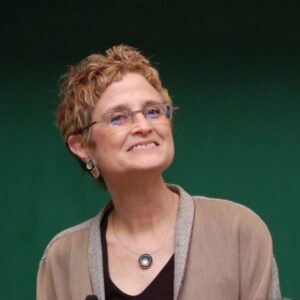
Sherry Wren, MD

Global Health Advisor, Surgery — Center for Innovation in Global Health

Sherry Wren, MD

Global Health Advisor, Surgery — Center for Innovation in Global Health

Describe a story from your own life when a leader provided valuable mentorship, support, or inspired your career path.

I would like to reflect on the impact that US women surgeons, the American College of Surgeons, and the Association of Women Surgeons have had in embracing and supporting women surgical trainees and junior staff in the College of Surgeons of East Central and Southern Africa (COSESCA).

My engagement with this effort began when I started a collaborative relationship with the Department of Surgery at the University of Zimbabwe College of Health Sciences in 2012. Only 5% of surgeons in Zimbabwe were women, and none were on the general surgery faculty at the University.

I was the first woman professor of surgery that the students and trainees had seen. The students rapidly organized and created an organization DREAM (Dedicated to Reach, Empower, and Mentor) to encourage and support women to enter surgical training. This group had a significant impact, and members became the first surgical specialists in their fields after completing their training. DREAM participated in conversations with COSESCA in 2014, when the decision was made to establish Women in Surgery Africa (WISA) as an official part of COSESCA. There was a paucity of women surgical consultants to help, so American women surgeons stepped up to provide critical mentorship, scholarships, and organizational support to WISA.

I have personally mentored the first specialty surgeons in CT, urology, orthopedics, pediatrics, and general surgery in their respective nations, and have witnessed the growth of women entering surgery training programs over the years. I was honored to receive the Women in Surgery Africa: Inaugural “She for She” Award in 2018.

COSESCA recently published an analysis of the surgical trainee workforce, comparing 2015 to 2022, and found a 50% increase in the number of women surgeons, with Ethiopia (+220%) and Malawi (+160%) showing the largest increases. This growth reflects the commitment and leadership of a cadre of women surgeons in the US who have been supporters of WISA and COSESCA.