Published: 08/03/2026
Dr. Phoebe Wamalwa, a 2025-26 Global Health Emerging Scholars fellow, examines the social determinants behind type 1 diabetes outcomes in Kenyan youth
By Catherine Wu, Global Health Communications Assistant
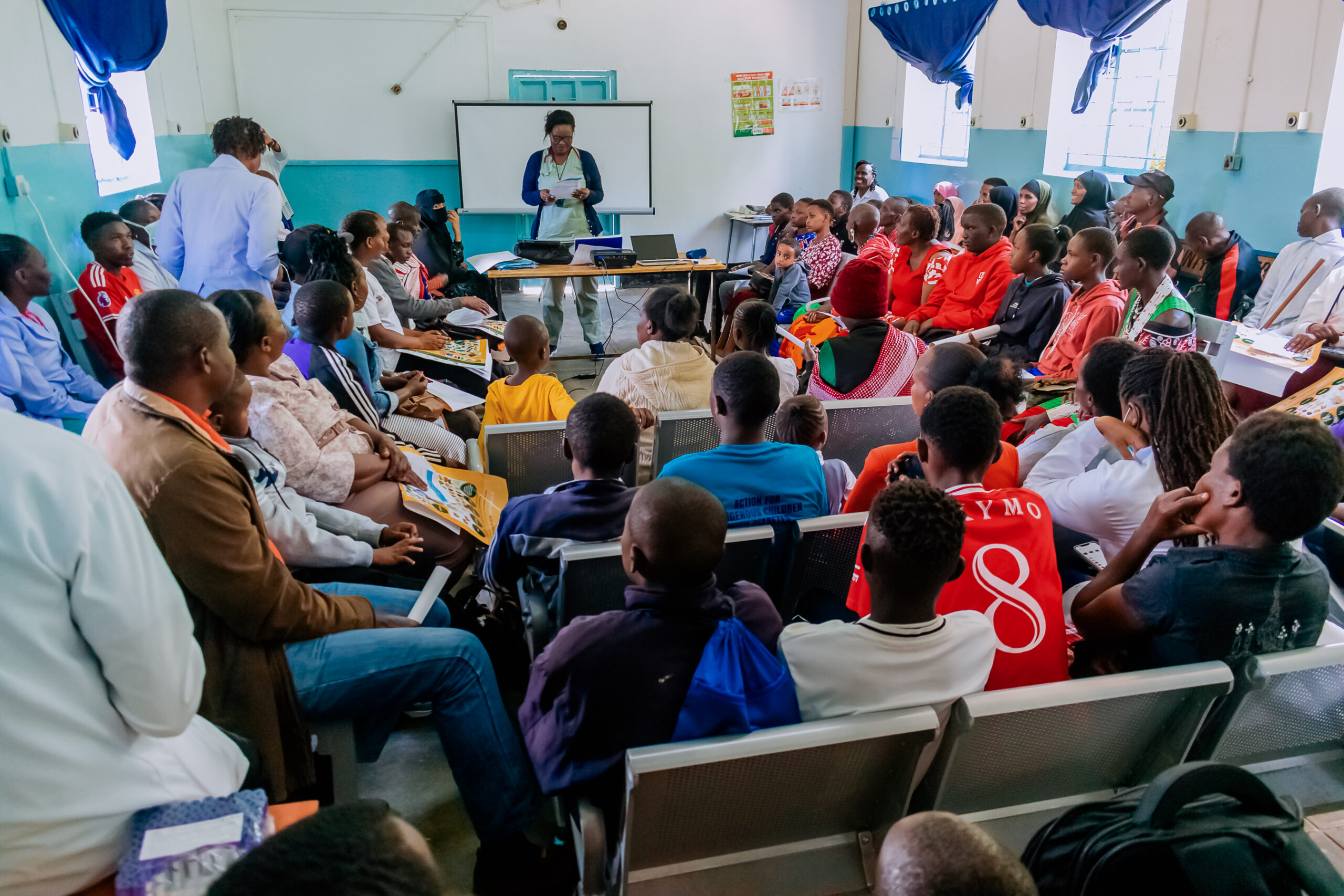
Phoebe Wamalwa at a youth day camp in Kajiado County Referral Hospital during a peer group discussion in session. (Courtesy of Phoebe Wamalwa)
When the 24-year-old patient arrived at Dr. Phoebe Wamalwa’s clinic in Kenya, she was unemployed, experiencing depression, living with HIV, and facing kidney failure related to diabetes. Her experience reflects a common pattern among young adults with type 1 diabetes, in whom lack to follow-up and interruptions in care can lead to preventable, life-threatening complications.
For Wamalwa, a paediatrician and paediatric endocrinologist at Kajiado County Referral Hospital with affiliation to Kenyatta National Hospital and Kenyatta University, that case exemplifies a question she has spent the past year trying to answer: what happens to young Kenyans with type 1 diabetes after the medical system stops treating them as children? Wamalwa’s presentation also highlights a triple threat facing sub-Saharan Africa: the growing burden of non-communicable diseases, persistent infectious diseases, and continuing gaps in maternal, newborn, and child health.
Wamalwa explored this health burden as a 2025-26 Global Health Emerging Scholars (GHES) fellow. GHES is a 12-month, mentored fellowship in global health research, supported by the Stanford Center for Innovation in Global Health (CIGH) and funded by the National Institutes of Health. Wamalwa was mentored by Dr. Christine Ngaruiya, Stanford associate professor in emergency medicine and a CIGH global health faculty fellow, and Dr. Cyrus Mugo, senior research scientist at Kenyatta National Hospital.
A career dedicated to preventing avoidable suffering
Wamalwa describes her path to medicine as “shaped by personal loss, clinical experience, and a commitment to equitable care.” Growing up in western Kenya, Wamalwa lost her brother to misdiagnosed typhoid fever at a young age, and later, her grandfather to undiagnosed hypertension. Wamalwa said she pursued medicine “to prevent avoidable suffering.”
At the University of Nairobi, Wamalwa learned to diagnose children with infectious and non-communicable diseases during her pediatrics training. She then received specialized training in endocrinology and established the first pediatric endocrinology and diabetes clinic at her hospital, which has grown rapidly.
Addressing a common but often undiagnosed health problem
Wamalwa’s career centers on type 1 diabetes, an often undetected condition in sub-Saharan Africa. While Kenya reports slightly over 20,000 people living with the illness, 6,000 of whom are children and adolescents, Wamalwa suspects the true burden is much higher. Diabetes is underdiagnosed for several reasons, she said. First, patients often wait until the late stages of the disease to receive care. By then, many are already in ketoacidosis, a life-threatening form of diabetic emergency. Also, diabetes has similar symptoms to other diseases commonly seen in Kenya, including pneumonia, acute abdomen, gastroenteritis, malaria, urinary tract infections, meningitis, and malnutrition — all of which lead to frequent misdiagnoses.
Even after a correct diagnosis, managing the disease itself is both an “intensive and painful daily task,” Wamalwa said. Between up to ten finger pricks a day and constantly calculating insulin doses relative to dietary carbohydrate intake, diabetes management is “mentally taxing” as much as it is physically demanding, Wamalwa said.
Successful care requires going beyond insulin access and glucose-monitoring supplies, to education and health literacy, food stability, family and social support, and a multidisciplinary team.”
Dr. Phoebe Wamalwa, paediatrician and paediatric endocrinologist at Kajiado County Referral Hospital with affiliation to Kenyatta National Hospital and Kenyatta University, 2025-26 Global Health Emerging Scholars (GHES) fellow
“Successful care requires going beyond insulin access and glucose-monitoring supplies, to education and health literacy, food stability, family and social support, and a multidisciplinary team,” Wamalwa said. It also requires a “continuity of care” from infancy to adulthood, but services for children and young adults are particularly limited, she said.
There are several reasons for this, including a limited pediatric and adult endocrinology workforce, few trained diabetes educators, gaps in health coverage, high rates of youth unemployment, and free insulin support programs that patients age out of as soon as they turn 25.
“Transition after age 25 means moving from subsidized pediatric care and free insulin diabetes support programs to financial and healthcare insecurity,” Wamalwa said.
Treating diabetes in the context of the patient’s life
Wamalwa approaches diabetes care by addressing six key social determinants of health: economic stability, education and health literacy, social and community context, neighborhood and physical environment, healthcare system, and food environment.
Each social determinant uniquely impacts patients’ health. Poor health literacy means that a patient may not know how to adjust their insulin levels when readings run high or low, or how to respond in cases of diabetic emergency. In homes, no electricity means patients have no reliable ways of storing insulin, which needs to be refrigerated for safe and effective use. Some families use a two-pot system — where two vessels are surrounded by wet sand, with insulin placed in the inner one, which has been shown to perform comparably to refrigeration in hot climates — though the stability of insulin in these systems is uncertain.
Adverse social determinants of health are not just a Kenyan problem; they are global.
Dr. Phoebe Wamalwa, paediatrician and paediatric endocrinologist at Kajiado County Referral Hospital with affiliation to Kenyatta National Hospital and Kenyatta University, 2025-26 Global Health Emerging Scholars (GHES) fellow
“Adverse social determinants of health are not just a Kenyan problem; they are global. Even in the U.S., we have disparities.” Wamalwa said. “But the infrastructure is especially limited in low- and middle-income countries.”
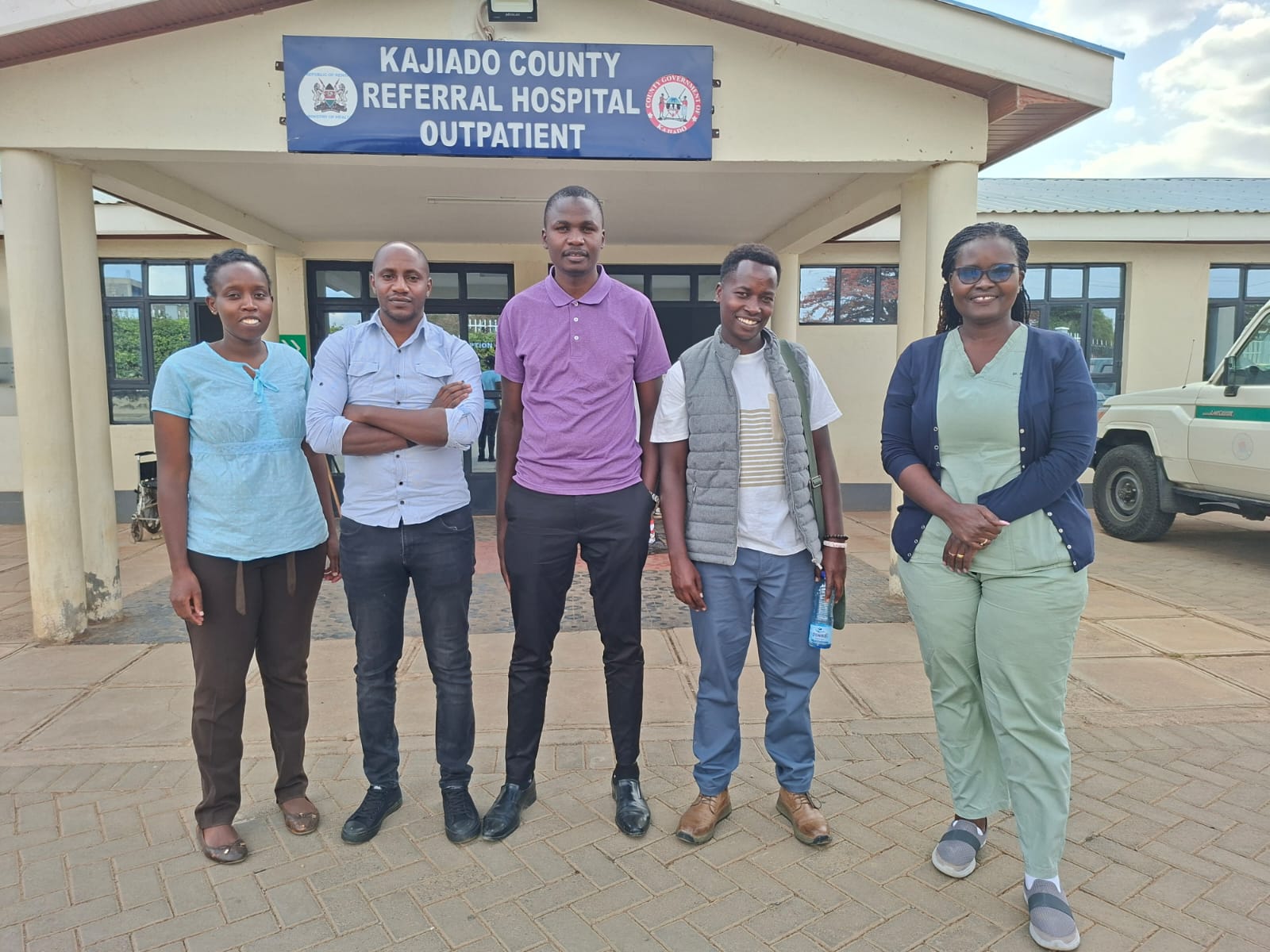
Phoebe Wamalwa with her research team at one of the study sites. (Courtesy of Phoebe Wamalwa)
For her cross-sectional GHES fellowship study, Wamalwa surveyed 164 young adults across clinics, assessing the six domains of social determinants of health, as well as psychological health and laboratory test outcomes. She hypothesized that the adverse social determinants of health would drive both chronic complications and psychological distress, and that support groups might mediate those effects.
Wamalwa observed that fewer than 5 percent of participants met the recommended level of blood glucose control, and the majority faced “reduced life expectancy.” An additional one in three participants were at risk of kidney complications, while over half had abnormal cholesterol levels, putting them at risk of heart complications. Furthermore, diabetes distress and depression affected 30% of the participants.
Wamalwa found that social and community challenges, food scarcity, and especially economic instability presented the greatest obstacles to diabetes management. Notably, worsening social determinants of health corresponded with increased blood sugar levels, as well as decreased psychological wellness.
Strikingly, she found that peer support showed a stronger association with improved health outcomes than an insulin regimen. “Insulin access is necessary, but not sufficient,” she said.
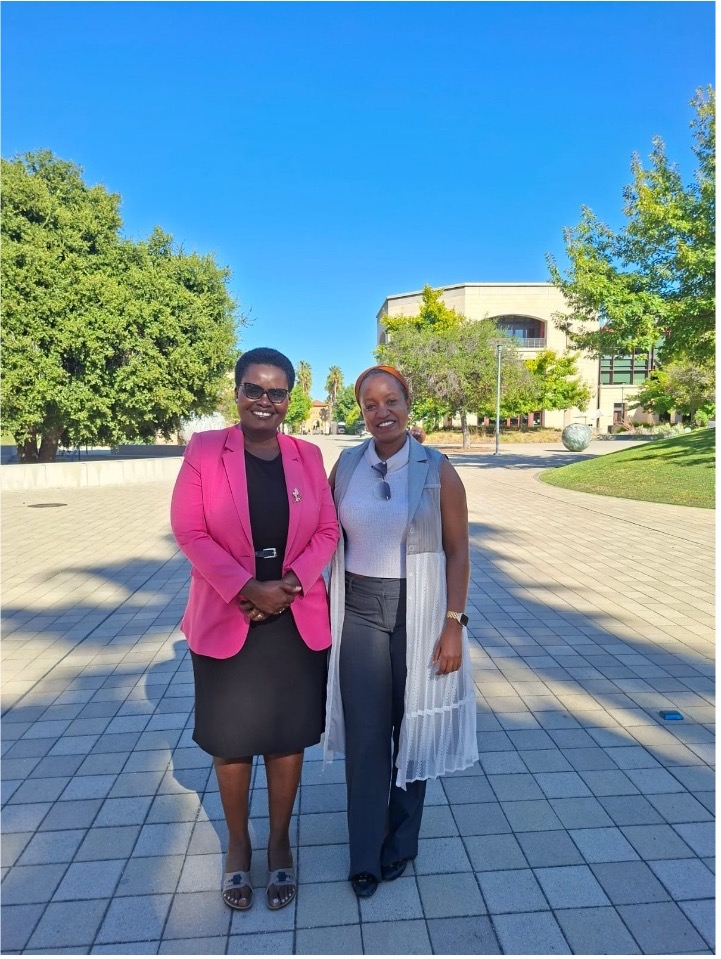
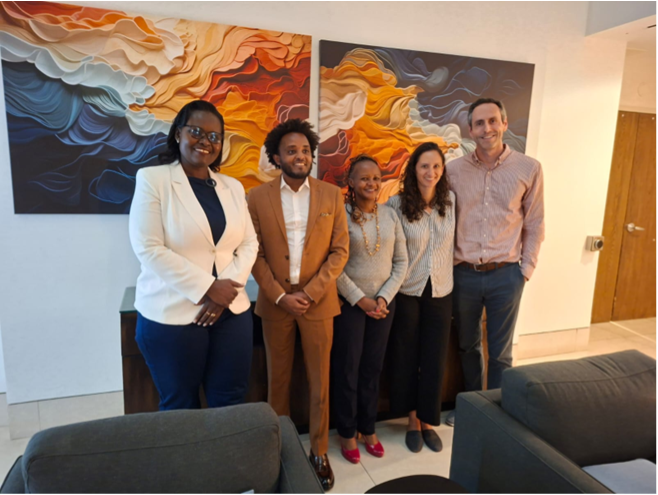
Left: Phoebe Wamalwa and her fellowship mentor, Christine Ngaruiya. Right: Phoebe Wamalwa at the LAUNCH orientation workshop in 2025 with the Stanford team. (Courtesy of Phoebe Wamalwa)
Following the yearlong fellowship, mentor Ngaruiya expressed admiration for Wamalwa’s dedication to honing her research question, framework, instruments, and data analysis.“It’s been such a joy seeing her grow so much over a year,” she said.
Ngaruiya also credited the NIH funding that enabled the fellowship. “It provides truly catalytic funding for individuals like Dr. Wamalwa while completely transforming knowledge and education both in Kenya and here at Stanford,” Ngaruiya said.
Together with like-minded colleagues, patient advocates, professional networks, healthcare institutions, and government partners, Wamalwa is committed to addressing the social and structural barriers identified through her research.
Specifically, she seeks to strengthen team-based care by expanding training and task-sharing among nurses, clinical officers, diabetes educators, and peer supporters, while advocating for the meaningful integration of type 1 diabetes into national non-communicable disease strategies. Through these partnerships, she hopes to co-develop scalable transition-care models that prevent gaps in services as young people move from paediatric to adult care, including psychosocial, financial, and self-management support.
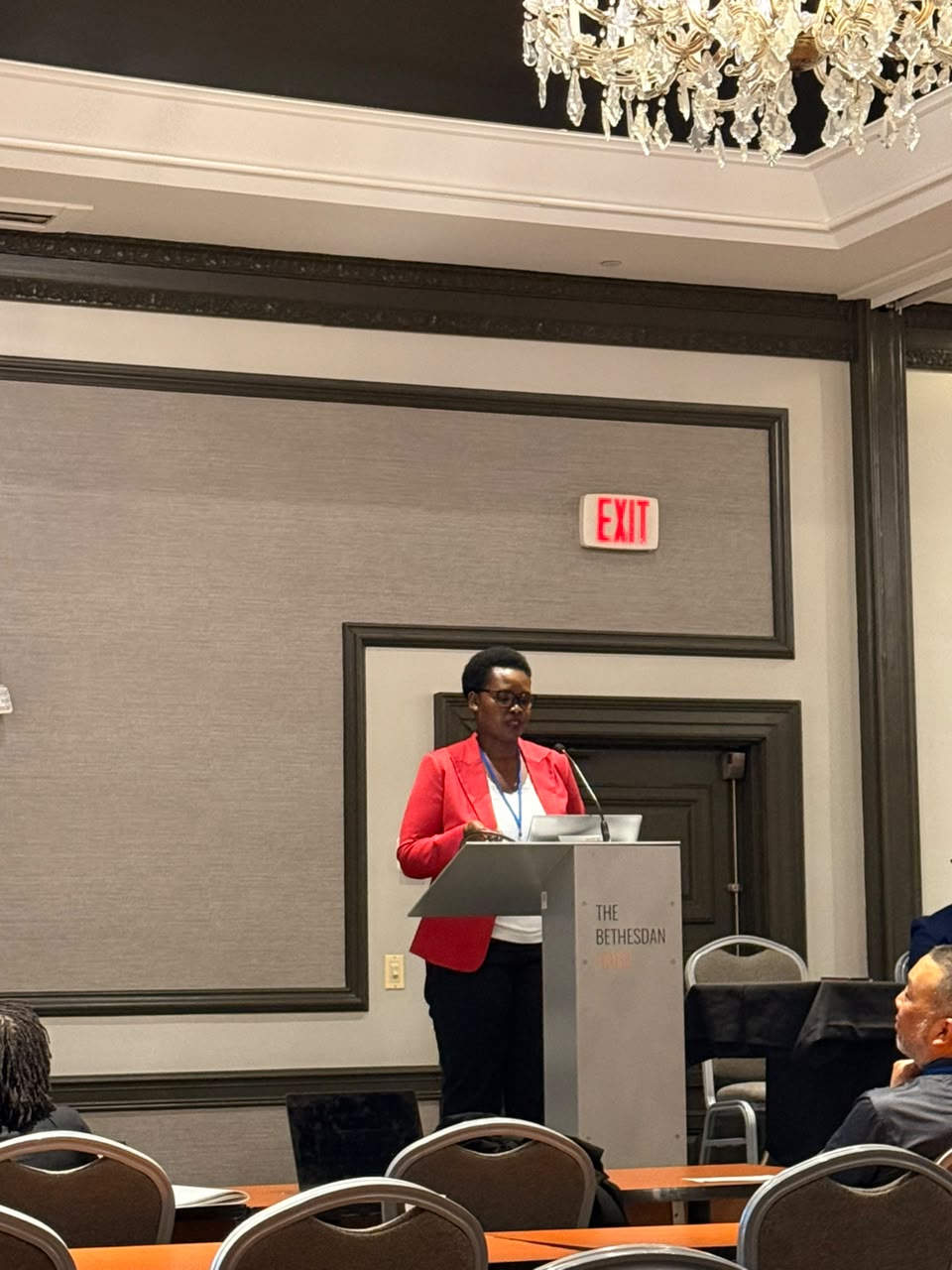
Phoebe Wamalwa presenting her research at the NIH LAUNCH workshop in Bethesda, Maryland, during July 2026. (Courtesy of Phoebe Wamalwa)
Wamalwa has written a forthcoming commentary, in consideration for submission at the The Lancet Africa Regional Journal, arguing that insulin regimens alone are not sufficient for diabetes management. This will be among the first to make that case from the African continent, challenging a standard of care largely developed in high-income settings.
“It demonstrates the power and importance of local researchers and local scientists doing this work, and the questions that they’re able to bring in because of their local experience,” Ngaruiya said.
The next frontier should focus on building systems that help young people survive, transition, and thrive.
Dr. Phoebe Wamalwa, paediatrician and paediatric endocrinologist at Kajiado County Referral Hospital with affiliation to Kenyatta National Hospital and Kenyatta University, 2025-26 Global Health Emerging Scholars (GHES) fellow
Moving forward, “the next frontier should focus on building systems that help young people survive, transition, and thrive,” Wamalwa said.