Published: 04/24/2026
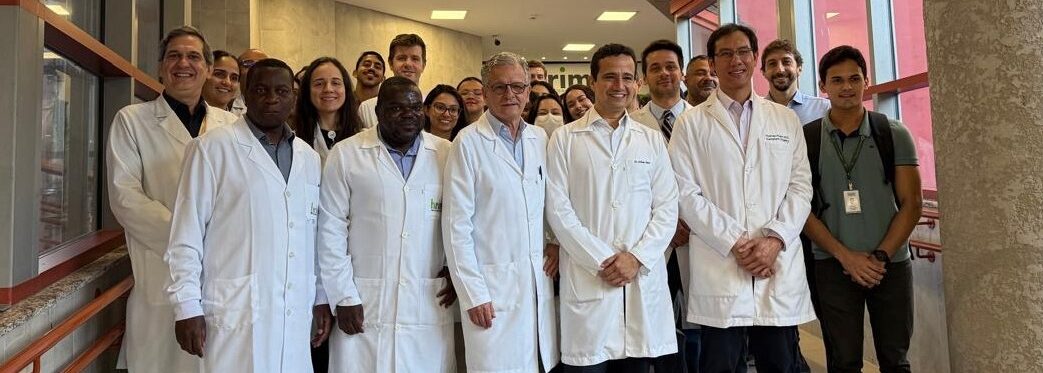
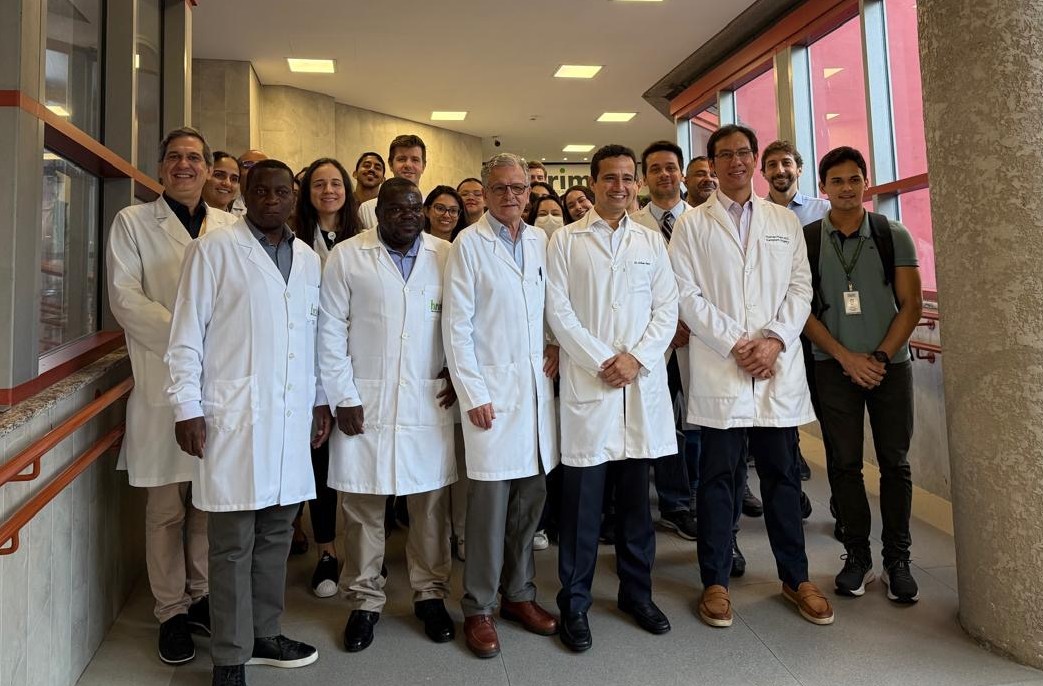
Cover image: Physicians from Zambia and Stanford traveled to Brazil‘s Hospital do Rim to gain insights from the world’s busiest kidney transplant center.
By Catherine Wu, Global Health Communications Assistant
Across three hospitals in three continents, a tri-directional collaboration has emerged from the Stanford Kidney Transplant Program to share knowledge and skills between Stanford, Hospital do Rim in São Paulo, Brazil, and University Teaching Hospital (UTH) in Lusaka, Zambia.
Dr. Thomas Pham, a clinical associate professor in the division of abdominal transplantation, helped lead a recent three-week trip to Hospital do Rim as part of a training initiative with surgeons from Lusaka.
This initiative emerged from a visit to the University Teaching Hospital (UTH) in Lusaka, as part of the American College of Surgeons (ACS) Health Outreach Program for Equity (HOPE), in 2024. After this visit, Pham developed a review to strengthen and maintain a renal transplant program in UTH, which led the Zambian Ministry of Health to request further collaboration to realize this effort.
With support from both ACS-HOPE and the Stanford Department of Surgery’s Global Engagement program, Pham established a formal surgical training collaborative between Stanford and Zambia to teach technical skills like living donor kidney transplantation, as well as to improve pre- and post-surgery care. Since then, Pham has regularly visited UTH, accompanied by Stanford faculty members Dr. Ken Tran, clinical assistant professor in the division of vascular surgery, and Dr. Maha Mohamed, clinical associate professor in the Division of Nephrology. Together, they worked closely with UTH’s Dr. Victor Mapulanga, academic chief of surgery, and Dr. Aggrey Mweemba, the chief nephrologist of the country.
After establishing the collaborative in Zambia, Pham sought ways to expand the program with other hospitals around the world. Jeffrey Punch, MD, a transplant surgeon and director of the kidney transplant program at the University of Michigan, connected Pham with colleagues from Hospital do Rim in São Paulo, where Punch had taken Rwandan surgeons for an observership program.
Drawing from Punch’s experience, Pham, together with UTH’s Dr. Emmanuel Liche, a general surgeon, and Dr. Mapulanga, visited Brazil in March of 2026. Visiting Hospital do Rim was a particularly insightful experience, Pham said, because Brazil has the world’s largest public health system, and because the hospital is the world’s busiest kidney transplant center, performing 1,000 transplants per year despite operating in a resource-limited setting. The hospital offered valuable lessons for the Zambian physicians as they sought to increase their country’s capacity for transplants.

Specifically, Pham described how the Zambian and U.S. surgeons operated under “different mentalities.” In the U.S., resources such as laparoscopy are readily available, so surgeons and hospitals won’t hesitate to offer minimally invasive surgeries like robotic surgeries.
In Zambia, however, such options are largely out of reach, making the Brazilian model more applicable. Surgeons at Hospital do Rim have developed workarounds in resource-limited environments that map more similarly onto the realities that Liche and Mapulanga face in Zambia, Pham said.
During a three-week-long observership at Hospital do Rim, the Zambian surgeons worked alongside Brazilian surgeon Dr. Wilson Aguiar and chief nephrologist Dr. Jose Medina. They participated in over 50 kidney transplants, learning about the hospital’s kidney transplant system and best practices to bring back to their hospital.
Liche particularly appreciated the ability gain hands-on surgical experience: “Unlike in some centres, Hospital do Rim allowed me to scrub and be second or even first assistant,” he said. Each member of the hospital’s surgical team “did their part to integrate us into the system” and “were kind to us making sure we felt at home.”
One technical skill that the Zambian surgeons learned was open donor nephrectomy, a procedure to remove a kidney for a transplant. Mapulanga said he was impressed by the hospital’s approach to safely removing a kidney from a donor through a very small incision that required few resources — enabling donors to recover quickly and leave the hospital just two or three days after operation.
Beyond the technical aspect, Mapulanga and Liche also gained insight into a health system with a strong public health insurance program to meet the many costs associated with kidney transplants.
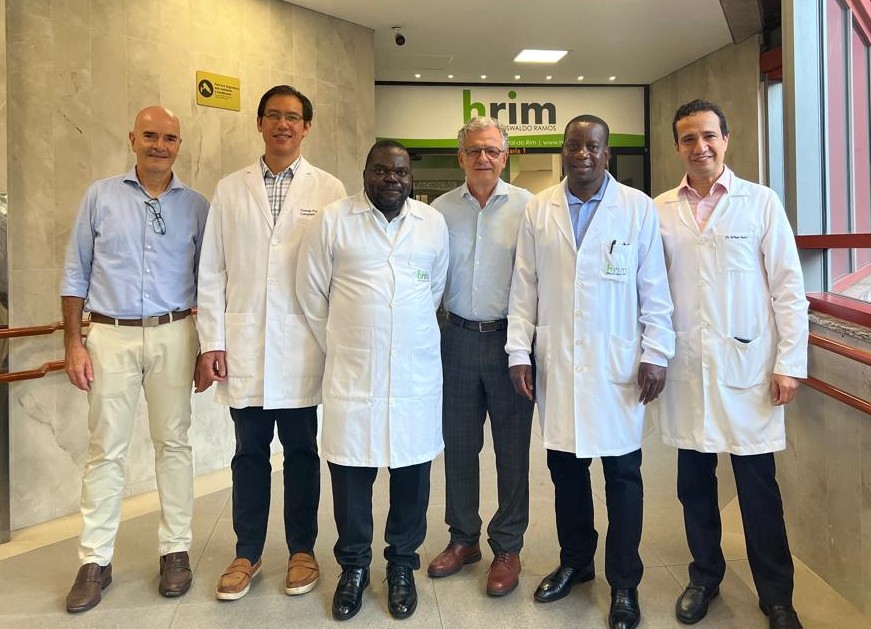
The Brazilian doctors hosting the exchange found the experience very meaningful as well.
“It was very rewarding to see the engagement of the Zambian physicians and the strong potential for applying this knowledge in their local context,” Aguiar said.
During the observership, Aguiar and Medina shared technical aspects of transplantation with the Zambian surgeons as well as strategies to build sustainable programs in UTH, including team organization, logistics, patient selection, and resource optimization, which are all crucial in resource-limited settings.
Pham also enjoyed learning about Hospital do Rim’s health system, transplant allocation system, and surgical approach to kidney transplants. “I hope to host Jose Medina here at Stanford in the future to share his vision of kidney transplantation and how we can make it cost-effective and affordable for all,” Pham said.
Aguiar echoed the potential for further international collaboration: “Our interaction with Dr. Pham was extremely valuable, and his insights will certainly help us further improve our own program,” he said. “We hope this marks the beginning of many future collaborations.”
“We have a lot in common, whether you’re from Zambia, the U.S., or Brazil,” Pham said. “Being an experienced transplant surgeon and going to the different centers, there were lots of things that we did similarly, but I also learned a lot about their different approaches. Regardless of where you’re from, or how well developed your kidney transplant program is, we often have the same challenges and successes.”
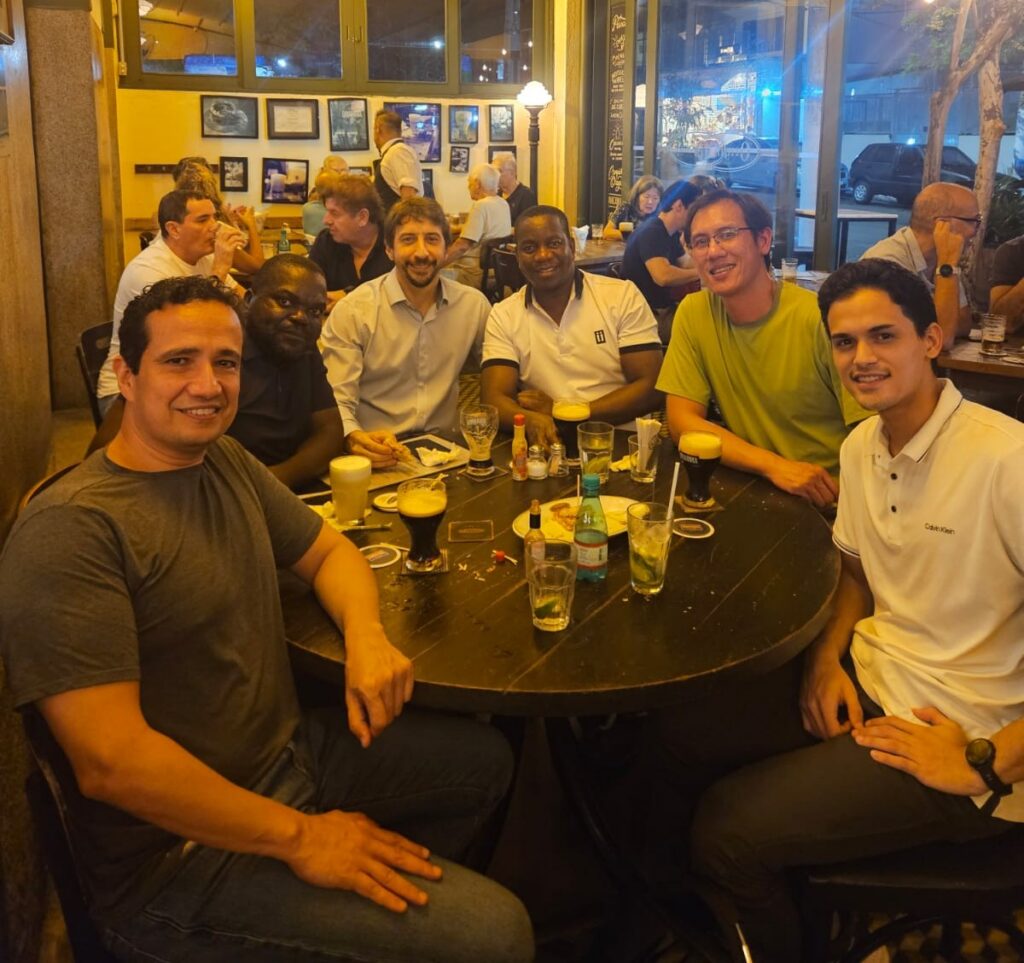
Moving forward, Pham, Mapulanga, and Liche identified key takeaways that they hope to transplant directly into their practice in Zambia, beginning next month.
Returning to Zambia Malupanga and Liche say the experience has greatly increased their confidence in performing kidney transplants. “I carried an enhanced clinical knowledge and renewed commitment to advancing kidney transplant care and training,” Mapulanga said.