Published: 02/12/2026
By Catherine Wu, Global Health Communications Assistant
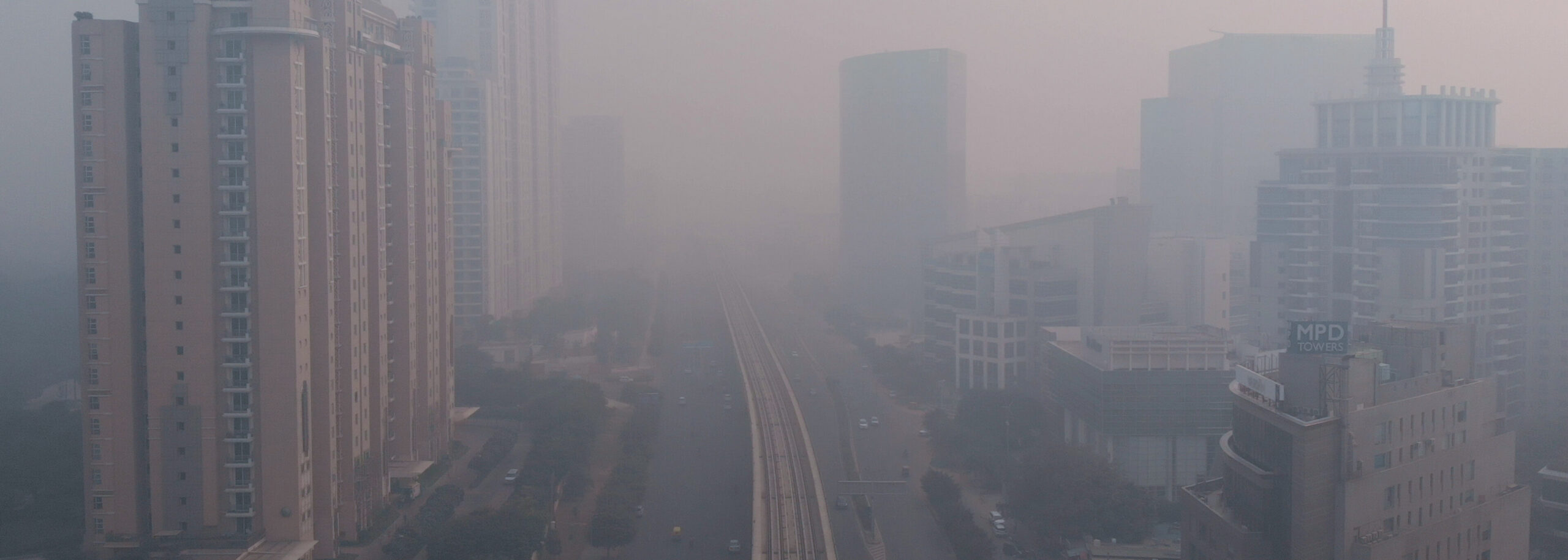
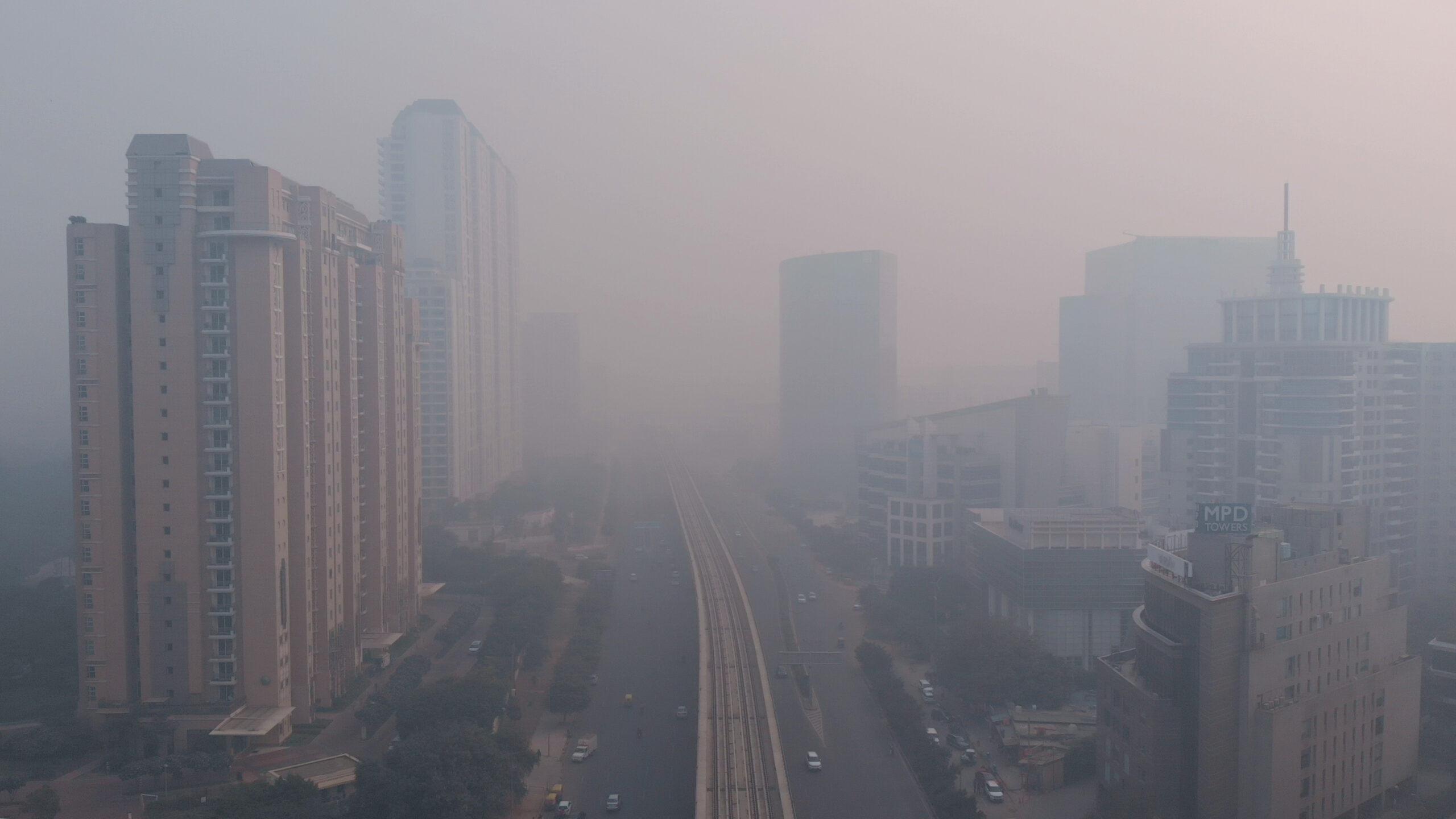
Image: An urban center in India covered in smog in winter. By Raunaq Chopra / Climate Visuals Countdown: https://www.climatevisuals.org/
Fine particulate matter (PM2.5) from air pollution poses a significant global health challenge, especially in countries like India, which have large populations and high levels of pollution. In India, aerosols and dust combine with a mixture of combustion-related particles from biomass and coal burning, as well as vehicle emissions. This pollution worsens respiratory conditions like asthma, especially in vulnerable populations such as young children. Despite these clear health implications, air pollution’s impact on healthcare systems, particularly the emergency department, remains understudied.
Now, a publication in npj Clean Air, supported by a Stanford Global Health Seed Grant, shows that higher levels of PM2.5 in India are associated with increases in pediatric ambulance dispatches, impacting the country’s emergency care capacity. The study builds on earlier work, which created a high-resolution dataset of daily PM2.5 levels across India using machine learning and remote sensing data. The new study links this exposure dataset to over 1.1 million pediatric ambulance dispatch records to examine a question that hasn’t been well understood: how short-term pollution spikes translate into urgent healthcare needs for children, and whether the impacts differ by age, sex, and other demographics.
“This is especially critical in India, where timely care is often constrained by access barriers and an overburdened health system, making ambulance services a key gateway to acute care and a sensitive indicator of system strain,” said Ayako Kawano, a Stanford Ph.D. candidate in Environment and Resources and the publication’s first author. “The study helps connect air quality directly to urgent healthcare demand in a way that can inform both air-pollution policy and health-system preparedness.”
The study helps connect air quality directly to urgent healthcare demand in a way that can inform both air-pollution policy and health-system preparedness.
Ayako Kawano, Stanford PhD candidate and Lead Author
Researchers were surprised by how much vulnerability to air pollution exposure varied by sex and age. Girls were disproportionately affected, due to longer delays in seeking care, poorer nutrition and health, and higher exposure to trauma. Children under the age of five experienced the greatest increase in ambulance dispatches, indicating that the youngest children are more susceptible than their older peers to air-pollution-related health emergencies.
Additionally, researchers identified strategies to combine emissions controls, monitoring, and public health interventions to mitigate the impacts of air pollution. Using these strategies, lowering annual air population concentrations to India’s national guideline of 40 μg/m3 could reduce pediatric ambulance dispatches by just over 10%, and lowering concentrations to the WHO standard of 5 μg/m3 could reduce dispatches by nearly one third.
These findings suggest that improving air quality could deliver rapid, tangible benefits by reducing acute events and easing strain on constrained emergency medical services, particularly for the most vulnerable groups,
Ayako Kawano
“These findings suggest that improving air quality could deliver rapid, tangible benefits by reducing acute events and easing strain on constrained emergency medical services, particularly for the most vulnerable groups,” Kawano said.
The publication was co-authored by Stanford researchers Sam Heft-Neal, Srinivasa Rao Janagama, Jennifer A. Newberry, and Global Health Faculty Fellows Matthew Strehlow and Eran Bendavid.