Published: 07/31/2026
By Catherine Wu, Global Health Communications Assistant
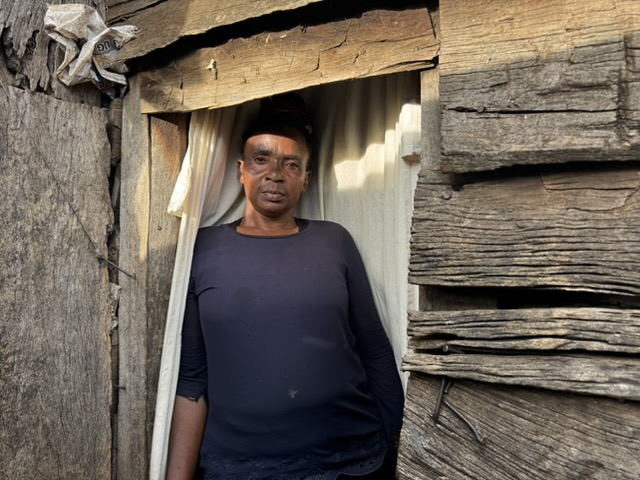
A health care worker who works on an island in Lake Victoria, pictured by her front door. Photo by Michal Ruprecht.
On one of the most remote islands in Lake Victoria, Africa’s largest lake, three women community health workers care for roughly 600 people — making up 20% of the community — living with HIV, even as the dissolution of USAID has disrupted Uganda’s HIV treatment plan. The three women tend to neighbors and strangers, doing so for free, and, as Michal Ruprecht recalls, “with unwavering commitment.”
“The way they went about their work was just beautiful and inspiring to me as a medical student,” Ruprecht said. “They showed me what it means to care for vulnerable people even when it felt like the rest of the world had turned its back on them.”
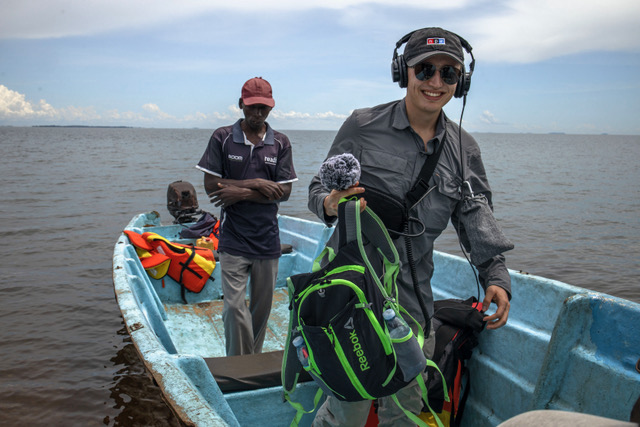
In a reporting trip to Uganda, Michal Ruprecht travelled to the country’s most remote communities, including islands in the middle of Lake Victoria, to investigate the effects of U.S. aid cuts on the country’s HIV treatment program. Photo by Stuart Tibaweswa.
When Ruprecht met the women during a reporting trip as part of his capstone for the Stanford Global Health Media Fellowship, he had initially planned to move through several communities, gathering as many perspectives as he could. Instead, the medical student, in between his third and fourth year at Wayne State University School of Medicine, stayed with the women for nearly a week.
“More isn’t necessarily always better,” Ruprecht realized. The story, he understood, was really centered on the dedication of the three women. Once he slowed down in his reporting, the relationship stopped feeling “transactional,” he said. Instead, “It felt like we were in this together, working to share their stories in a way that was ethical, meaningful, and heartfelt.”
The instinct to slow down and let the people closest to a problem drive the reporting is what Ruprecht set out to bring to his journalism. As the 2025-2026 Stanford Global Health Media Fellow, Ruprecht aimed to amplify overlooked stories from the Global South and advocate for communities usually left out of the scientific discourse. A year later, having published dozens of stories on topics ranging from malnutrition in Gaza to the newborn hepatitis B vaccine in Ghana, he is returning to Wayne to complete his medical education with a heightened resolve to combine his twin passions for global health and journalism.
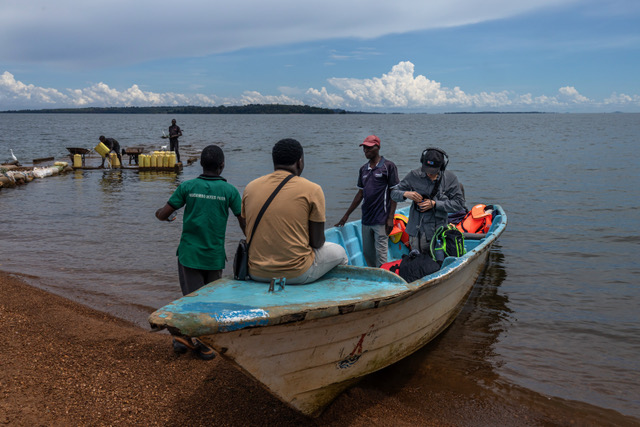
For his media fellowship capstone, Michal Ruprecht reported from a remote fishing village along the Tanzanian border, where Uganda’s first documented case of HIV was identified in the early 1980s. Photo by Stuart Tibaweswa.
Ruprecht’s path to health journalism began in college and medical school, when he observed growing mistrust of mainstream medicine during the pandemic. He also came to recognize how longstanding structural problems within the health care system contributed to that mistrust.
Ruprecht also noted shortcomings and barriers in global health journalism. Global health reporting, he observed, is often undertaken by outsiders. Journalists he met from the Global South described restrictive press freedoms and chronic underfunding of health journalism. Meanwhile, reporters with funding, including Ruprecht himself, often enter those communities as “complete strangers.”
“Historically [this] led to a lot of mistrust between sources and journalists,” he said. For Ruprecht, that meant spending more time listening than interviewing, building trust before asking people to share deeply personal stories.
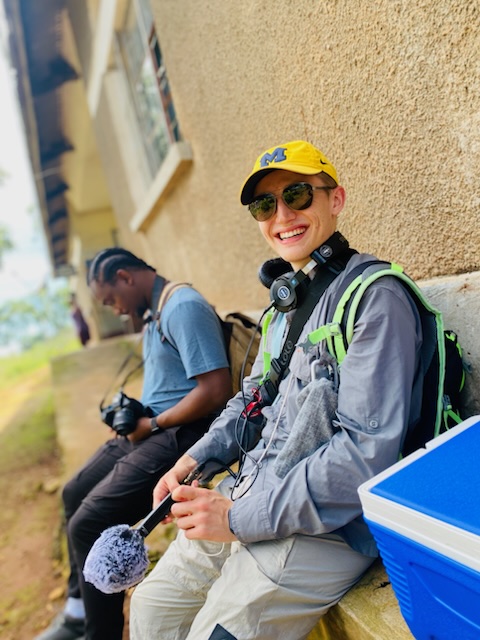
On the islands of Lake Victoria, Michal Ruprecht reported with his colleague, Stuart Tibaweswa, a photographer originally from Uganda. Photo by Michal Ruprecht.
During his fellowship at Stanford, Ruprecht took graduate coursework at the Stanford Journalism Program and reported for CNN’s health desk. He also reported at NPR during his term as a 2025 AAAS Mass Media Fellow. For his capstone, Ruprecht traveled to Uganda for one month, reporting on the effect of USAID cuts to the country’s HIV treatment program. One way he prepared for his reporting was reading Jennifer Nansubuga Makumbi’s “A Girl is a Body of Water,” a historical fiction book set in Uganda. Reading a book “does not make you an expert,” he said, but it did give him a window into the culture of the country he would be reporting in.
“I found it incredibly helpful and fruitful in better being able to communicate with my sources, and also be more thoughtful about the way I did my journalism,” Ruprecht said, explaining that the novel introduced him to cultural traditions such as the special status of twins, where twins and their families are honored with unique names, rituals, and celebrations.
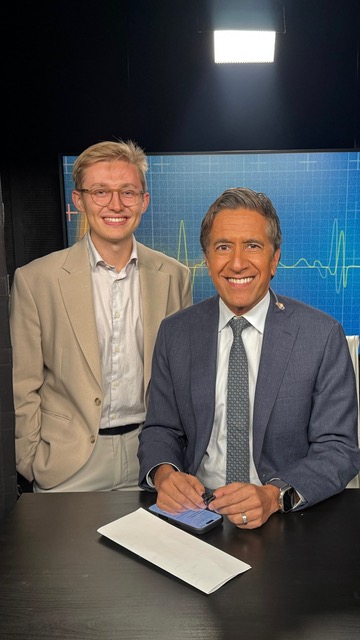
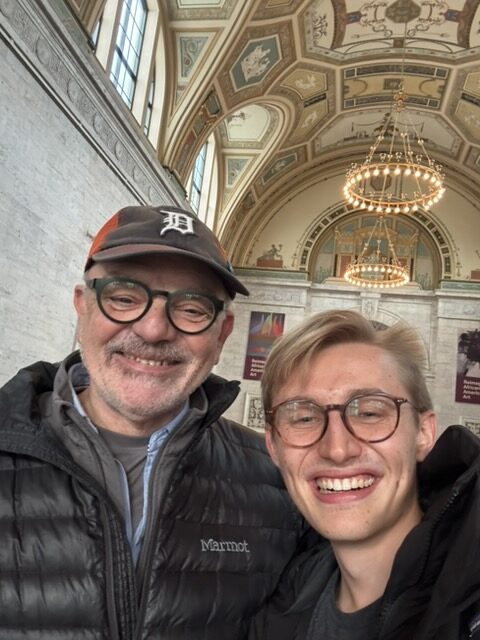
Left: At CNN, Michal Ruprecht worked with Dr. Sanjay Gupta, the chief medical correspondent. Right: At NPR, Michal Ruprecht was mentored by Don Gonyea, former national political correspondent. Photos by Michal Ruprecht.
The commitment to communities shaped Ruprecht’s work in national newsrooms. This past year, Ruprecht trained with editors at NPR with support from a separate AAAS Mass Media Science & Engineering Fellowship, an experience which impacted his approach to community-centered global health storytelling. Ruprecht worked with Marc Silver at NPR — the “toughest editor” he’s ever had. Silver pushed him to gather more detail, fact-check rigorously, and write with nuance. For a single article, he regularly interviewed more than a dozen sources, sometimes more than 40.
While reporting on a country with the world’s lowest vaccination rate, he was determined to highlight the perspective of a parent who wanted, but couldn’t access, vaccines for their child. Despite much difficulty, Ruprecht persisted and eventually found a mother in southern Sudan, Alzhraa Fadul, and her 2-year-old son, whose story became the heart of the piece.
At CNN, during the Stanford Global Health Media Fellowship, Ruprecht reported on breaking news and health policy, including a story on how the Trump administration’s immigration policies were affecting foreign physicians in the U.S. A month after it was published, the administration created new exemptions for the affected doctors. This was a powerful reminder of how “journalism can impact policy,” he said.
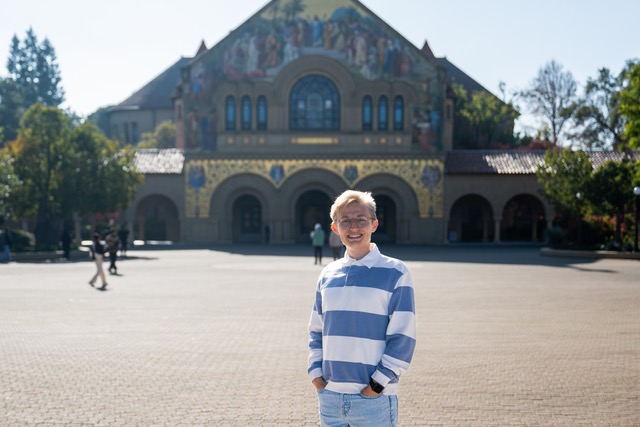
Following his capstone in the Stanford Global Health Media Fellowship, Michal Ruprecht will continue his medical education as he begins a new fellowship by The Carter Center, reporting on pediatric mental health. Photo by Ziyu Zhu.
Ruprecht hopes to continue advocating for the most vulnerable communities across the globe. Practicing medicine can be what he calls an “insider baseball world,” where physicians see trends and barriers to care, but this information too often remains siloed, not reaching the broader public — the very patients whose health is affected. To address this, as a physician-journalist, Ruprecht feels empowered to carry that first-hand experience from the hospital to the public, where it can be of greater use.
“I can’t write a law or tell a lawmaker to read my story,” Ruprecht said. “But what I can do is try and get that information out into the world.”
As he resumes his medical education with plans to become a child neurologist, Ruprecht plans to continue practicing journalism. Supported by a mental health reporting fellowship from The Carter Center, he’ll be conducting a reporting project on pediatric mental health. The two lenses that first drew him to this work — the physician’s and the journalist’s— have now become a single way of seeing, reporting, and advocating.
Read Michal Ruprecht’s reporting here.