Published: 07/28/2026
By Catherine Wu, Global Health Communications Assistant
More than a decade ago, Dr. Esmeralda Melgoza, PhD, MPH, CHES, watched a family emergency expose a gap in healthcare that she would later dedicate her career to trying to close. Her grandmother, crossing a Los Angeles intersection, was struck by a car making a left turn. When the responding emergency medical technicians (EMTs) and paramedics arrived, none spoke Spanish, the only language Melgoza’s grandmother understood. Hours passed before anyone contacted Melgoza’s family, who found her grandmother recovering in the emergency department.
“It was difficult to have this accident and not be able to communicate with the responding medics,” Melgoza recalled her grandmother telling her. An undergraduate at the time, Melgoza looked for existing research on the problem her grandmother had experienced, only to find sparse literature on language barriers in emergency medical services (EMS) that could, in the worst case, mean life or death for patients like her grandmother. This gap motivated Melgoza to begin formal research on emergency services and language access.
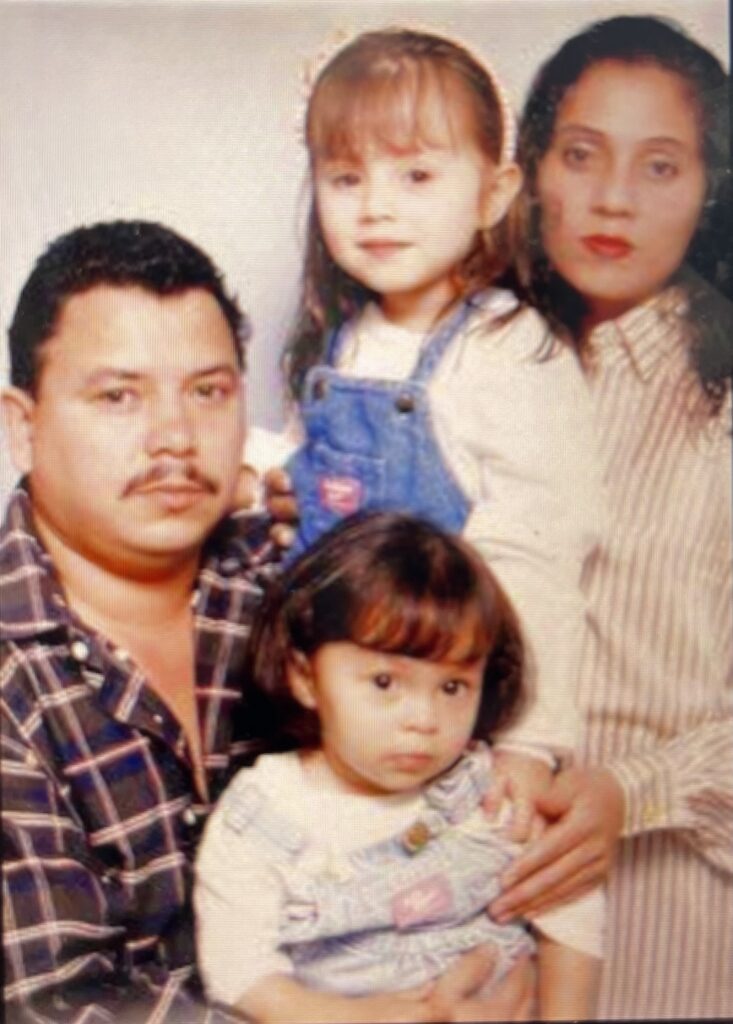

Esmeralda Melgoza’s family is from Ayotlan, a small town in central Mexico. (Photo courtesy of Esmeralda Melgoza)
Today, Melgoza is a second-year postdoctoral researcher in the Stanford Department of Emergency Medicine and a postdoctoral affiliate with the Center for Innovation in Global Health. She is examining the questions raised by her grandmother’s accident as a co-principal investigator on a Stanford Global Health Seed Grant, supported by the Center for Innovation in Global Health and the Department of Emergency Medicine, titled “Borderline Care: Advancing Emergency Medical Services in Northern Mexico.”
Melgoza’s research follows an emergency through each of its phases. Starting from when someone calls 911, she follows the patient from the dispatch call to the prehospital setting where care is delivered by EMTs and paramedics, then their transport, until the patient finally reaches a hospital’s emergency department. Previously, Melgoza conducted most of her research in the United States. This Global Health Seed Grant-funded project allows her to focus her attention south of the U.S.-Mexico border.
The study takes a mixed-methods approach to prehospital emergency care on the Mexico side of the border — one of the most complex humanitarian and medical corridors in the western hemisphere. The study has three aims. The first is quantitative: understanding what kinds of prehospital emergencies occur in this border region. The second is qualitative interviews, conducted in Spanish, with EMTs and paramedics working there, to assess the commonly encountered occupational and clinical challenges.
Finally, the team will turn research into action. “Once we understand what’s happening, how do we actually do something about it?” Melgoza said. She plans to use the findings from the team’s research to develop an evidence-informed toolkit, available online and in print, for EMS providers.
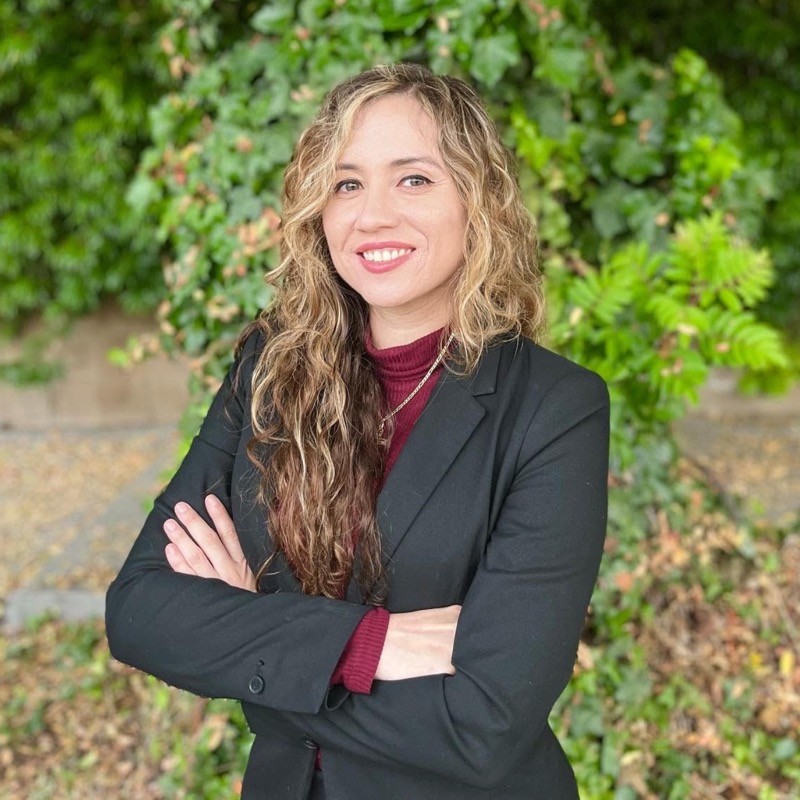
As a second-year postdoctoral researcher in the Stanford Department of Emergency Medicine and a postdoctoral affiliate with the Center for Innovation in Global Health, Esmeralda Melgoza is researching the questions in prehospital emergency care raised by her grandmother’s accident. (Photo courtesy of Esmeralda Melgoza)
With the current landscape of federal research funding, a lot has changed in terms of what research topics are being prioritized, according to Melgoza. Melgoza said these changes strengthen her commitment to do this type of research, find ways to directly target the gap, and support the health of underserved communities.
Aspects of Melgoza’s research at the Mexican border can also be expanded to emergency care internationally, but the research will need to be adapted to take local challenges and health determinants into account, she said. In particular, many of the prehospital emergencies documented along the border are complex, including conditions such as dehydration and severe muscle breakdown; these differ from other settings where cases like cardiac arrest may dominate emergency medicine. “We need to be careful in how we apply them, because each setting has its unique challenges as well,” she said.
Across her research, Melgoza returns to a core philosophy that has shaped the past few years of her career: research should address system-level challenges. This effort, she said, requires a wider set of collaborators, including academics, policymakers, technology developers, and community members.
“We can’t be working in silos. We need to be able to collaborate and partner with each other. The most important thing is to do research that will make the world a better and more equitable place for all.”
Dr. Esmeralda Melgoza, PhD, MPH, CHES, second-year postdoctoral researcher in the Stanford Department of Emergency Medicine, postdoctoral affiliate with the Center for Innovation in Global Health
Borderline Care: Advancing Emergency Medical Services in Northern Mexico is a project in partnership with Co-Principal Investigators: Jennifer A. Newberry, JD, MD, Associate Professor in the Department of Emergency Medicine, Eli Carrillo, MD, Clinical Associate Professor in the Department of Emergency Medicine, Peter D’Souza, MD, Clinical Associate Professor in the Department of Emergency Medicine, and Antero Godina Garcia, PhD, Professor in the Graduate School of Education.