Published: 07/22/2026
By Catherine Wu, Global Health Communications Assistant
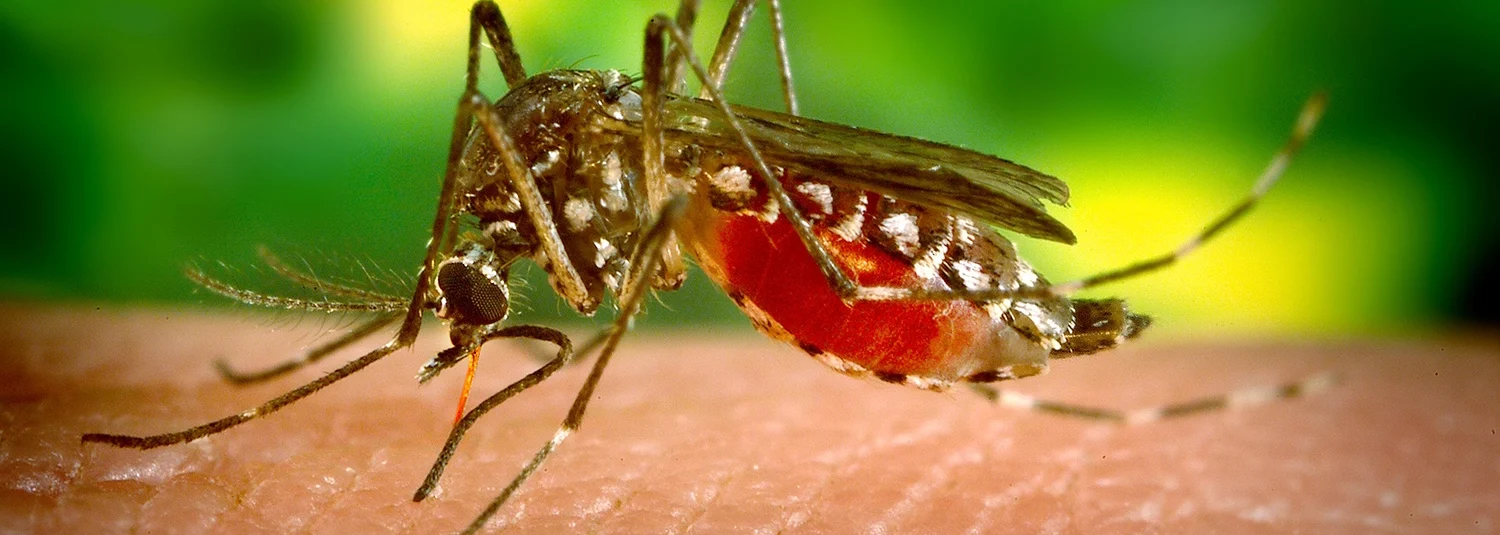
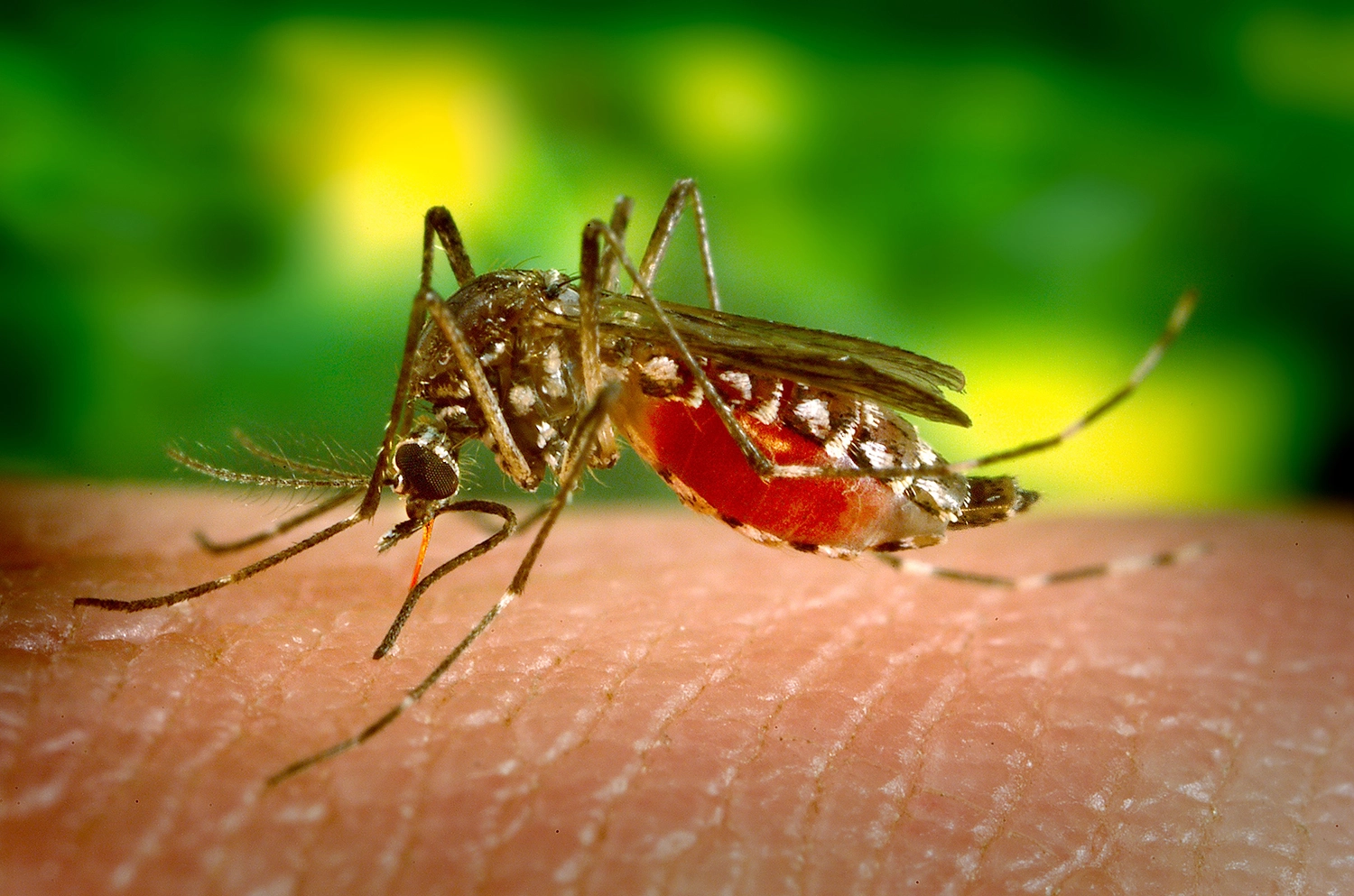
Photo: A female Aedes aegypti mosquito, the primary vector for the spread of Dengue fever. Credit: James Gathany/CDC)
As warming spring weather and lingering summer heat reshape the calendar of disease across the United States, researchers are quantifying what this shift means for the mosquitoes that carry it.
A new report by Climate Central, developed with input from Erin Mordecai, PhD, Stanford Associate Professor of Biology, Senior Fellow at the Woods Institute, and Global Health Faculty Fellow, Sadie Ryan, PhD, University of Florida Professor of Medical Geography, and James Mutunga, PhD, Pennsylvania State University – Harrisburg Assistant Professor of Biology, describes how climate change is reshaping a threat close to home.
Across 239 major U.S. cities studied from 1970 to 2025, 95% saw an increase in “mosquito disease days” — days warm enough for Culex mosquitoes to transmit West Nile virus, the most common mosquito-borne disease in the country — finding a widening window of risk. In particular, the 227 cities that saw increases averaged 18 more such days each year than in the early 1970s, with the largest increase in San Francisco, Reno, and Santa Maria, each of which saw roughly 50 additional days, doubling the national average. Both mosquitoes and the pathogens they carry are highly sensitive to temperature, according to the report, meaning that warmer conditions let the mosquitoes emerge earlier, stay active longer, and, up to a point, transmit disease more efficiently.
Mosquito-borne diseases are a health burden well beyond the U.S. borders. Worldwide, about half the population is at risk of malaria or dengue, and malaria alone kills more than 600,000 a year, most of them children under five, with the heaviest burden falling on communities in Africa and Asia. Continued warming is likely to lengthen transmission seasons and expand the geographic range of mosquito-borne diseases, placing millions more at risk in the decades ahead.
This work draws on research from Mordecai’s lab at Stanford, which studies how climate, species interactions, and global change drive infectious disease dynamics. “Climate change is driving rapid changes in the microbes that help us and those that make us sick,” Mordecai said. “We need to understand these impacts so we can prevent outbreaks and respond to them quickly.”