Published: 02/19/2026
By Catherine Wu, Global Health Communications Assistant
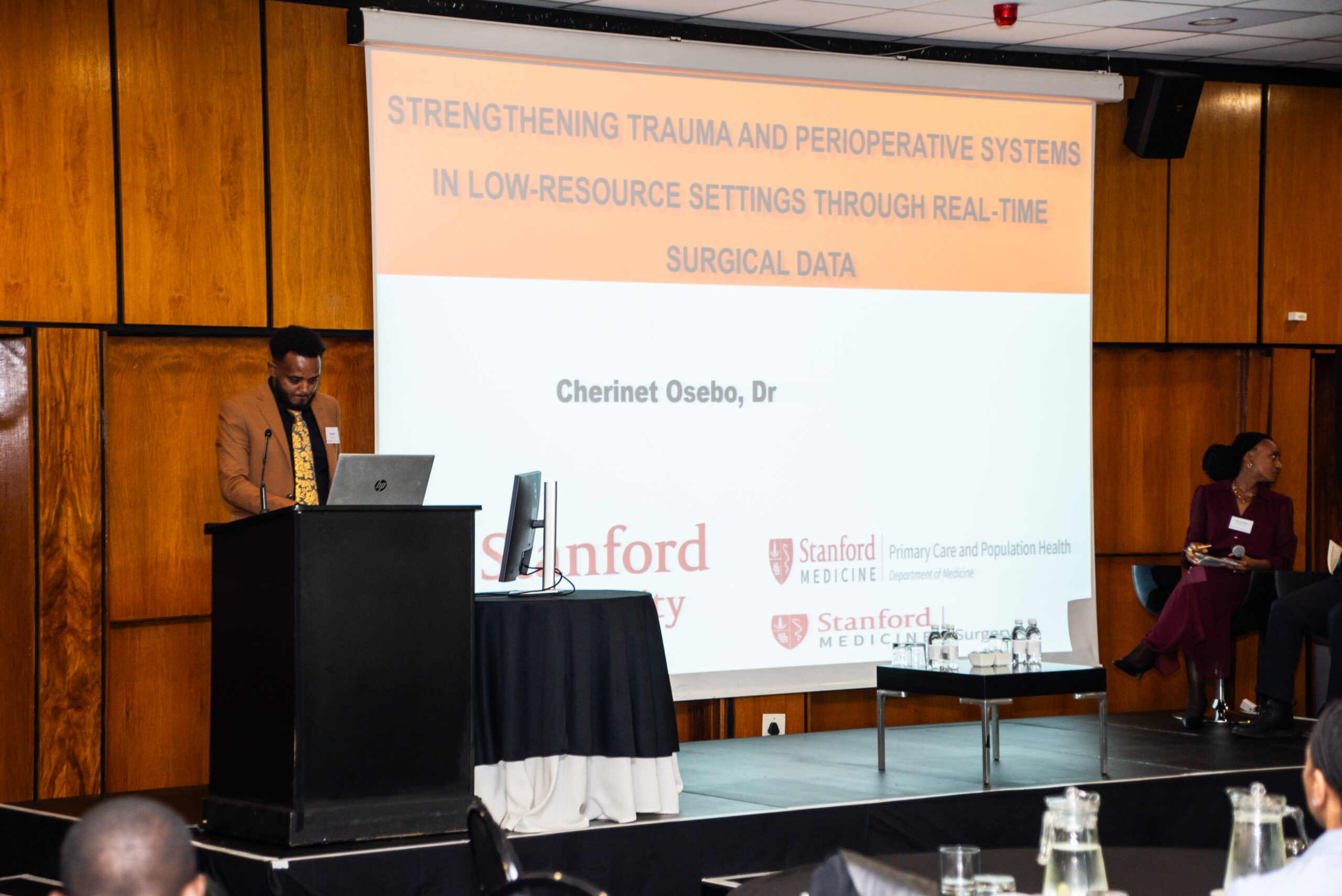
For Cherinet Osebo, PhD, MSc, witnessing the gap between what patients need and what physicians can offer, given their available resources, has shaped his commitment to improving trauma medicine.
“Seeing how small improvements in coordination, training, and data use can significantly improve patient outcomes continues to motivate my work,” he said.
Seeing how small improvements in coordination, training, and data use can significantly improve patient outcomes continues to motivate my work.
Dr. Cherinet Osebo
Currently residing in the United States, Osebo was born and raised in Ethiopia and practiced as an attending clinician in rural Ethiopian hospitals. He says that serving as an attending clinician there exposed him to the realities of delivering essential surgical and emergency care with limited infrastructure, equipment, and specialist support.
Osebo recalls caring for patients with treatable traumatic injuries who experienced preventable complications or death due to delays in care, limited data systems, workforce shortages, and challenges in coordinating emergency surgical services. These experiences motivated his desire to improve surgical systems in order to save lives.
Later, he relocated to Canada and earned a PhD in Global Surgery from McGill University. Through his research, Osebo established one of the first trauma surgery web-based databases in Tanzania, and now continues to engage in global health initiatives across sub-Saharan Africa.
This year, Osebo is working as a postdoctoral fellow at Stanford as a recipient of the NIH-funded Global Health Emerging Scholars (GHES) Fellowship. Through this 12-month program, post-doctoral trainees from around the world are matched with US institutions to conduct research projects relevant to the health priorities of project sites in the collaborating countries. Osebo also works closely with his Stanford mentor, Dr. Tom Weiser, MD, MPH, a clinical professor of surgery, and his Rwandan mentor, Professor Faustin Ntirenganya, a clinical professor of plastic surgery at CHUK, University of Rwanda.
Osebo’s fellowship project is informed by his early experience practicing in Ethiopia, where he first became interested in improving patient care by building sustainable systems, rather than simply focusing on individual clinical encounters, he said. These systems included data collection, performance feedback, and workflow optimization. Improving these systems could, in turn, enhance clinical outcomes as well as operational efficiency and resource allocation.
His GHES project focuses on strengthening trauma data systems and improving surgical care quality in Rwanda. Specifically, Osebo is developing a digital trauma platform similar to the one he implemented in Tanzania. Osebo’s new platform also works offline, across multiple devices, and can be bookmarked for quick access, making it a highly efficient and easily integrable tool for frontline providers in low-resource environments in Rwanda.
In addition to the new technology, Osebo is conducting hands-on training and soliciting continuous feedback from local teams in Rwanda to support quality improvement for delivering surgical care.
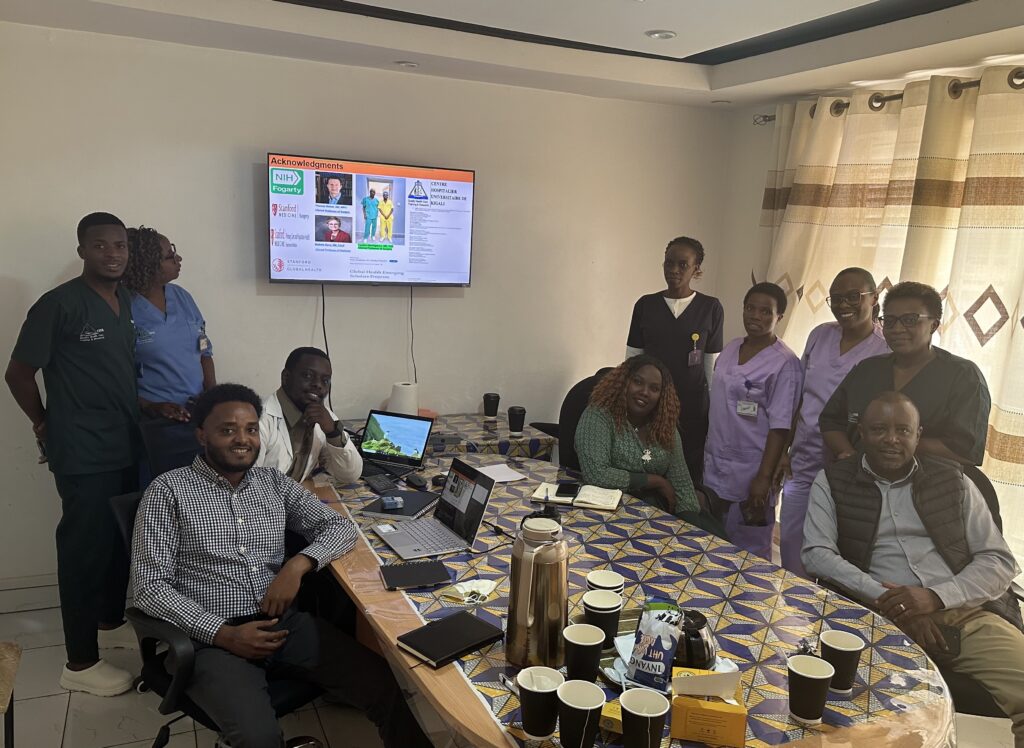
Now halfway through his fellowship, Osebo described ways the program has strengthened his leadership, collaboration, and project management skills. For example, in adapting the project to be Rwanda-centered following the need to shift from his initial project site in Ethiopia, Osebo learned to build new partnerships and understand a different health system’s structure. This allowed him to develop culturally responsive implementation strategies, he said.
“The experience has also reinforced my commitment to implement science approaches that connect research, clinical care, and health system strengthening in practical and sustainable ways,” Osebo said.
Through his work in Ethiopia, Tanzania, and Rwanda, Osebo has witnessed workflow improvements translate directly into real-world clinical impact. This motivates his ongoing efforts to improve healthcare systems.
For instance, in Tanzania, a review of trauma data revealed that critically injured patients were experiencing delays in surgical care because of inconsistent communication between the triage, emergency, and operating room teams. In response, Osebo’s team worked to streamline communication pathways. During a follow-up visit several months later, Osebo observed a trauma patient’s life-saving resuscitation. The procedure was successful, thanks to efficient coordination and communication between those providing evaluation and care.
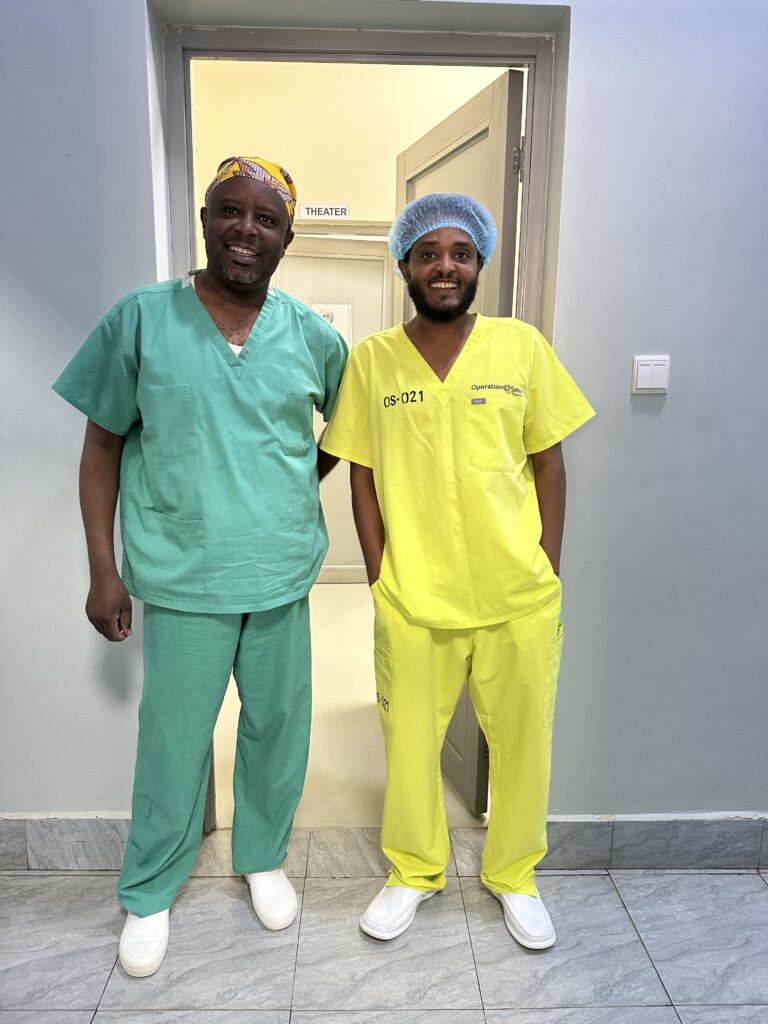
Now, Osebo plans to develop further evidence-driven programs that integrate clinical care, data science, education, and quality improvement to improve the delivery of patient care.
As these programs demonstrate success in low-resource settings, Osebo is also interested in exploring their efficacy in strengthening trauma and emergency care in rural hospitals in the United States.
“Through these efforts, I aim to further develop as a clinician-scientist, bridging frontline surgical care with research and systems innovation to create sustainable improvements in trauma and emergency surgical outcomes,” Osebo said.
Learn more about Osebo’s research and access his publications here.