Programs in Education
Global Health Media Fellowship
This unique opportunity provides medical students with up to 12 months of practical training in the fundamentals of journalism, communications, and global health reporting on a variety of media platforms in order to build a generation of physician-storytellers who can combat medical misinformation and shine a light on untold global health stories.
About the Fellowship
In order to overcome medical misinformation and build public trust, the world needs more physicians who are also versed in journalism and communication.
This year-long fellowship, the first of its kind in the U.S., teaches physicians-in-training to use various media channels to advocate and inform on global health issues. The selected fellow learns how reporting on global health issues can impact health and human rights efforts, foundation and government health assistance, and individual health choices.
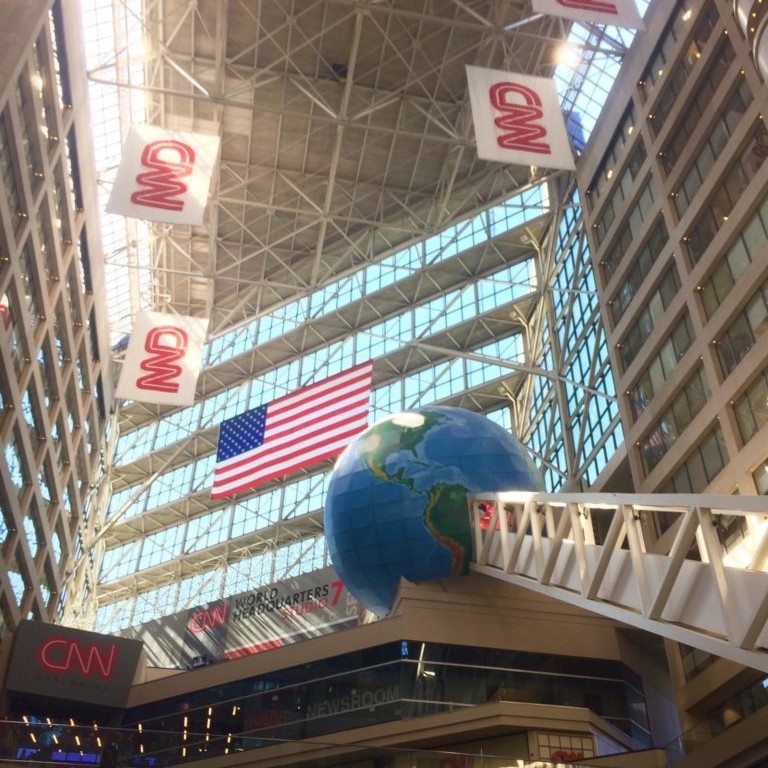
Through coursework, independent reporting, and a CNN internship, fellows gain an understanding of how to tell compelling stories and work with local, national and international media outlets in order to share valuable medical and global health information with the general public.
Applications for the 2026-27 year will open Dec. 1, 2025 and close Jan. 19, 2026.
Apply hereProgram Overview
Each year, one fellow is chosen from a pool of students enrolled in U.S. medical institutions committed to a career in global health (candidates do not have to be from Stanford). This opportunity provides medical students with up to 12 months of practical training in the fundamentals of journalism, communications, and global health reporting on a variety of media platforms, including print, online, broadcast, and social and digital media.
Each fellow participates in three rotations over the course of their fellowship year. The fellow spends the fall quarter (September through December) on campus taking courses in Stanford’s Graduate Program in Journalism. In the winter, the fellow is embedded at CNN in Atlanta with Dr. Sanjay Gupta’s health reporting team to learn the fundamentals of health reporting and gain hands-on experience. In late spring, the fellow conducts a capstone project based on their interests and focused on developing the skills they most wish to hone to improve their global health storytelling and mass communication capabilities.
A modest travel stipend is awarded in addition to the fellowship stipend. Fellows receive a stipend from CNN during their internship portion.
Eligibility
This fellowship is available to current allopathic medical and osteopathic (D.O.) students; the fellowship is not open to residents. Applicants must be currently enrolled in medical school at an institution in the United States to be considered. Fourth-year medical students interested in applying can opt to delay their residency and do a fifth year of medical school in order to be eligible.
Timeline
Applications for the 2026-27 year will open Dec. 1, 2025 and close Jan. 19, 2026.
Finalists will be contacted and interviewed in mid-late February. A fellow is typically selected by early- to mid-March.
The fellowship begins in September and runs through the following July.
Goals and Objective
We want to grow the audience for global health stories and we want to make sure the stories that are told are accurate. To help physicians engage with journalists, we designed this program to teach fellows:
- How journalists and TV medical correspondents select and frame topics, stories, and issues in the field of global health;
- Techniques to present and write persuasively about global health, medicine, and science;
- How to access new channels and technologies for persuasive communication.
Upon completion, the fellow will produce an in-depth article or other substantive media creation on a global health topic.
The Fellow will return to medical training with the expectation that in addition to treating patients, conducting research or teaching, she or he will also become an advocate and spokesperson for global health issues.
Contact Us
If you have questions, please email Communications Manager Jamie Hansen at jmhansen@stanford.edu.
Global Health Storytelling Advocacy Through Journalism: Webinar presented by Tasnim Ahmed
In this American Academy of Pediatrics webinar, 2021-22 Global Health Media Fellow Tasnim Ahmed shares lessons and insights gained through her fellowship with Stanford Journalism and CNN Health, about Global Health storytelling and advocacy through journalism.
Watch the videoPrevious Fellows
- 2011-12: Joyce Ho, Stanford medical student
- 2012-13: Kristina Krohn, MD, resident at the University of Minnesota
- 2013-14: Hayley Goldbach, University of Pennsylvania medical student
- 2014-15: Maren Shapiro, University of Pennsylvania medical student
- 2015-16: Michael Nedelman, Stanford medical student
- 2016-17: Priya Raja, University of Texas Southwestern Medical Center medical student
- 2017-18: Mark Lieber, University of California, Irvine medical student
- 2018-19: Edith Bracho-Sanchez, Children’s Hospital of Philadelphia pediatric resident
- 2019-20: Gina Yu, University of Michigan medical student
- 2020-21: Christopher Rios, Stanford medical student
- 2021-22: Tasnim Ahmed, Stanford medical student
- 2022-23: Janelle Chavez, Stanford Medical Student
- 2023-24: Mira Cheng, Stanford Medical Student
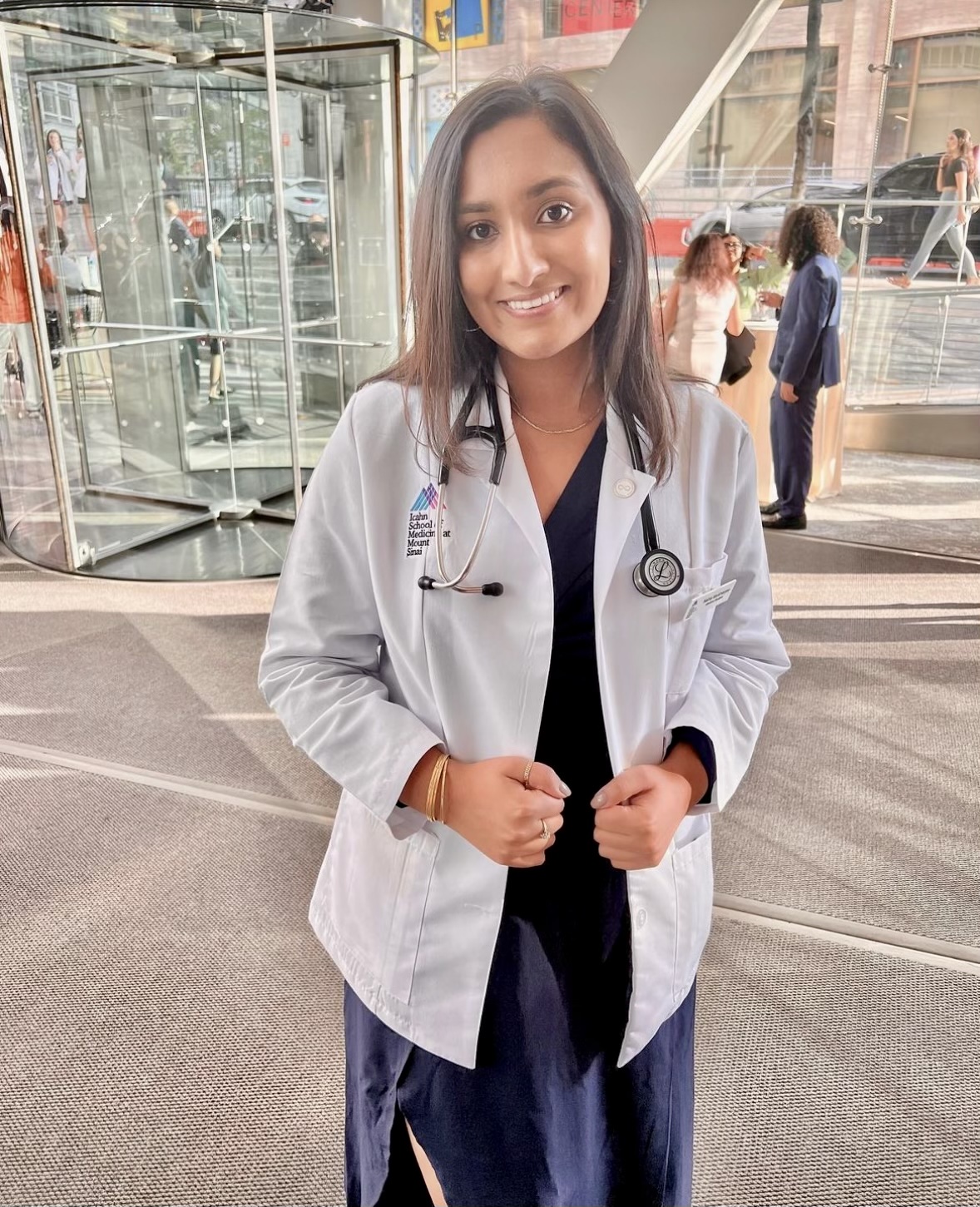
- 2024-25: Neha Mukherjee, Icahn School of Medicine at Mt. Sinai Medical Student
Selected Recent Media Fellow Stories
What to know about glyphosate, the herbicide behind a Trump executive order that’s angered MAHA moms | Michal Ruprecht, 2025-26 Fellow, CNN
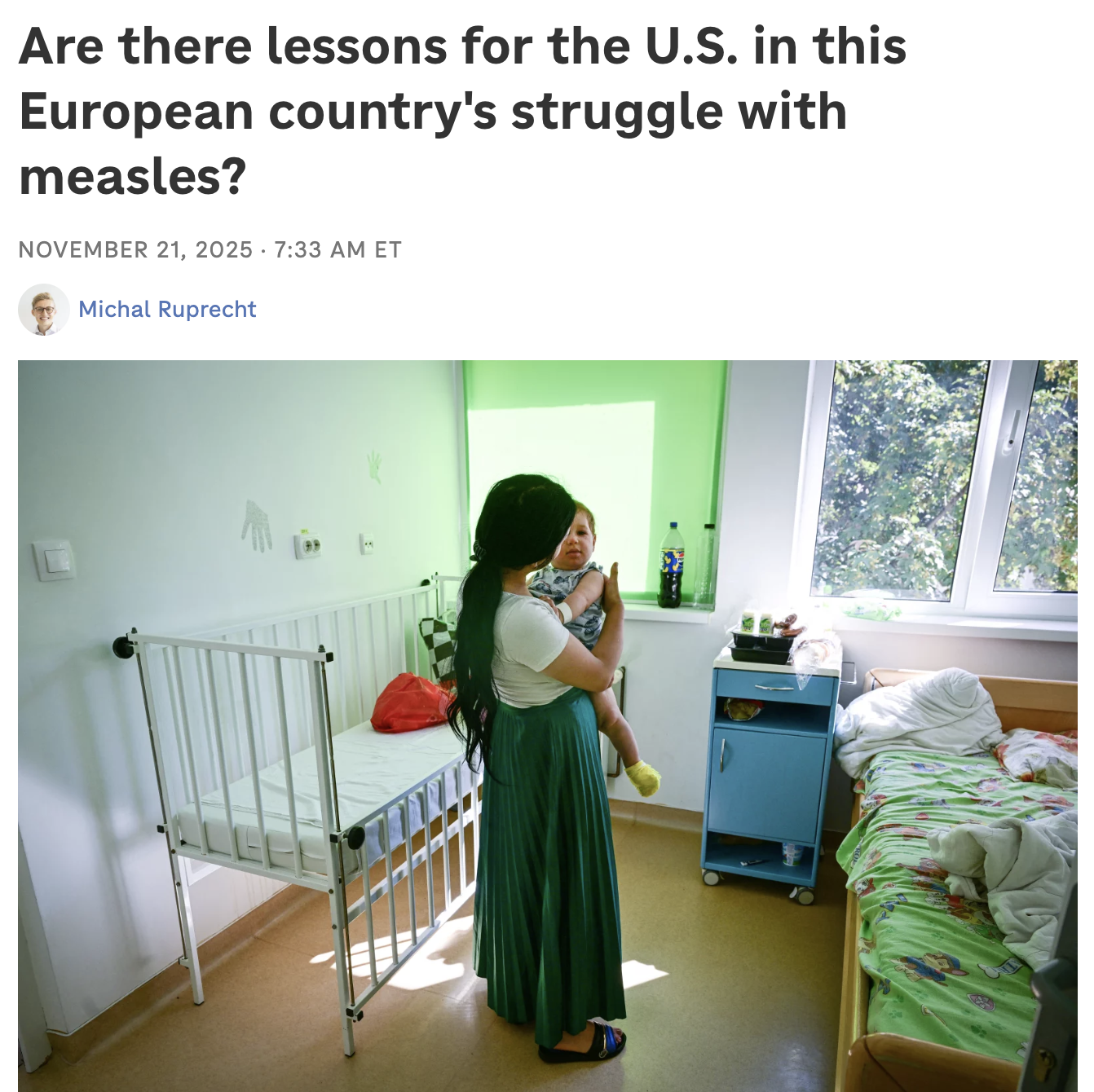
Are there lessons for the U.S. in this European country’s struggle with measles? | Michal Ruprecht, 2025-26 Fellow, NPR
Dr. Peter Hotez Takes the War Against Science Very Seriously | Michal Ruprecht, 2025-26 Fellow, NPR
This is what could happen to a child who doesn’t get vaccinated | Michal Ruprecht, 2025-26 Fellow, NPR
‘We all deserve safety’: Local anti-human trafficking groups navigate threats from ICE | Michal Ruprecht, 2025-26 Fellow, Stanford’s Peninsula Press
How Anti-Immigration Measures Could Deplete the US Health Workforce | Neha Mukherjee, 2024-25 Fellow, Think Global Health
Response to multistate measles outbreak hampered by unique set of challenges | Neha Mukherjee, 2024-25 Fellow, CNN
When speaking with vaccine-hesitant patients, pediatricians turn to these tips | Neha Mukherjee, 2024-25 Fellow, CNN
Gender-Based Violence: The Unseen Toll of Hurricanes | Mira Cheng, 2023-24 Fellow, Think Global Health
Barriers to US suburban Mpox vaccination persist amidst global emergency | Neha Mukherjee, 2024-25 Fellow, The Peninsula Press
Harris spent $2.4M on reproductive health ads targeting Georgia voters in campaign’s closing month | Neha Mukherjee, 2024-25 Fellow, The Atlanta Journal-Constitution
Doctors fleeing primary care is a crisis for Boston’s low-income neighborhoods | Tasnim Ahmed, 2021-2022 Fellow, The Boston Globe
How Medical Education is Adapting to Climate Change | Mira Cheng, 2023-24 Fellow, Think Global Health
Global fertility rates to plunge in decades ahead, new report says | Mira Cheng, 2023-24 Fellow, CNN
Paying people to stay sober: Promising but controversial treatment taking hold in California | Mira Cheng, 2023-24 Fellow, The San Francisco Chronicle
How ‘extraordinary’ survivors are still being pulled from rubble 10 days after massive earthquake | Janelle Chavez, 2022-23 Fellow, CNN
Climate change is contributing to the rise of superbugs, new UN report says | Janelle Chavez, 2022-23 Fellow, CNN
Tolerating the Pain: Accessing Medical Morphine in Bangladesh Roadblocks to getting opioids leave seriously ill patients coping with unbearable pain | Tasnim Ahmed, 2021-2022 Fellow, Think Global Health
Testimonials
“I’m nearly halfway through the Global Health Media Fellowship, and I’ve already grown significantly — both professionally and personally. As a member of the journalism master’s program, I’ve made lifelong friends while working on impactful journalism projects. Though this portion of the fellowship is brief, I grew close to those around me. I even wound up on a beach in Santa Cruz holding a broken surfboard with my classmates. The close-knit community I developed on campus also exists among the past media fellows. It’s telling that many fellows choose to return to Stanford for post-graduate training. And because of that, I’ve had the opportunity to connect with past fellows like Mira and Mark. Thus far, the fellowship has been everything I’ve imagined and more. I can’t wait for the remaining months.”
—Michal Ruprecht, medical student, Wayne State University School of Medicine, 2025-26 Global Health Media Fellow
“The global health media fellowship opened my eyes to the power of storytelling as a tool for sharing science information. As future physicians, we often get bogged down in scientific jargon, and end up using language that is difficult to understand. This year taught me how to translate complex concepts into digestible content. These words, however, carry even more impact when they are paired with personal anecdotes. For example, I spent the majority of my time at CNN reporting on the measles outbreak in West Texas. Beyond the total case counts and explanations of vaccine science, we also told stories of the children who died in the outbreak, the families who became susceptible to misinformation, and the public health workers who tirelessly protected their communities. Above all, I learned that in a year of drastic geopolitical change, good information still matters. It is our duty to remember that.”
— Neha Mukherjee, medical student, Icahn School of Medicine Mount Sinai, 2024-25 Global Health Media Fellow
“As a Global Health Media Fellow, I learned how to harness the knowledge and trust that we are endowed with as physicians to communicate clear and important messages. The Fellowship helped me better understand the current media landscape and the dangers of misinformation and information inequity. I plan to use my platform as a pediatrician in the future to advocate for child health locally and globally.”
— Mira Cheng, medical student, Stanford Medical School, 2023-2024 Global Health Media Fellow
“I had the opportunity to complete the fellowship during the COVID-19 pandemic. I worked at CNN, sharing information about the then unknown disease to millions who relied on our coverage to learn about the deadly condition. It was a life-changing experience; COVID-19 was the first disease in my lifetime to be associated with an infodemic, and I quickly realized the power and responsibility we have as doctors to stop misinformation and help guide informed public health outcomes on shared and free media platforms to best educate people about their health. I am now researching the influence of misinformation on health outcomes in vulnerable patient groups with limited access to healthcare but abundant access to free, easily accessible resources such as the internet and media to identify patients at risk of non-adherence due to medical distrust and misinformation. I am forever grateful for the tools the fellowship provided to guide this research and the care I provide my patients.
— Gina Yu, MD, ophthalmology resident at Stanford University, 2019-2020 Global Health Media Fellow
“The Global Health Media Fellowship gave me an entirely new perspective on how to develop and implement effective global health interventions using media modalities. During the international portion of my fellowship, for example, I worked with the Laotian Ministry of Health to produce public service announcements in response to dengue and hepatitis A outbreaks. This not only allowed me to hone my production/editing skills, but also showed me how important it is to support cross-collaboration between different government agencies.
— Mark Lieber, MD, Msc, Rising Infectious Disease Fellow, 2017-2018 fellow
“I learned how to hone the power of doctors’ voices through the Global Health Media Fellowship. Caring for patients in our exam rooms, teaching medical students, and advocating for health on a broader scale require certain skills from doctors. We need to be solid clinicians and excellent communicators. Health doesn’t start and stop when patients enter and exit the exam room. I teach medical students at the University of Minnesota skills for advocating for the health of all inside and outside of the exam room.”
— Kristina Krohn, MD, Associate Professor for Internal Medicine and Pediatrics at the University of Minnesota, 2012-13 fellow
News and Articles